Tool Drops
Screws, bits, and dropped hand tools puncture membrane, and a nail under a heel goes straight through.

As a Warren commercial roofing contractor, we replace plant and warehouse roofs and set the routes and protection other trades use on them afterward.
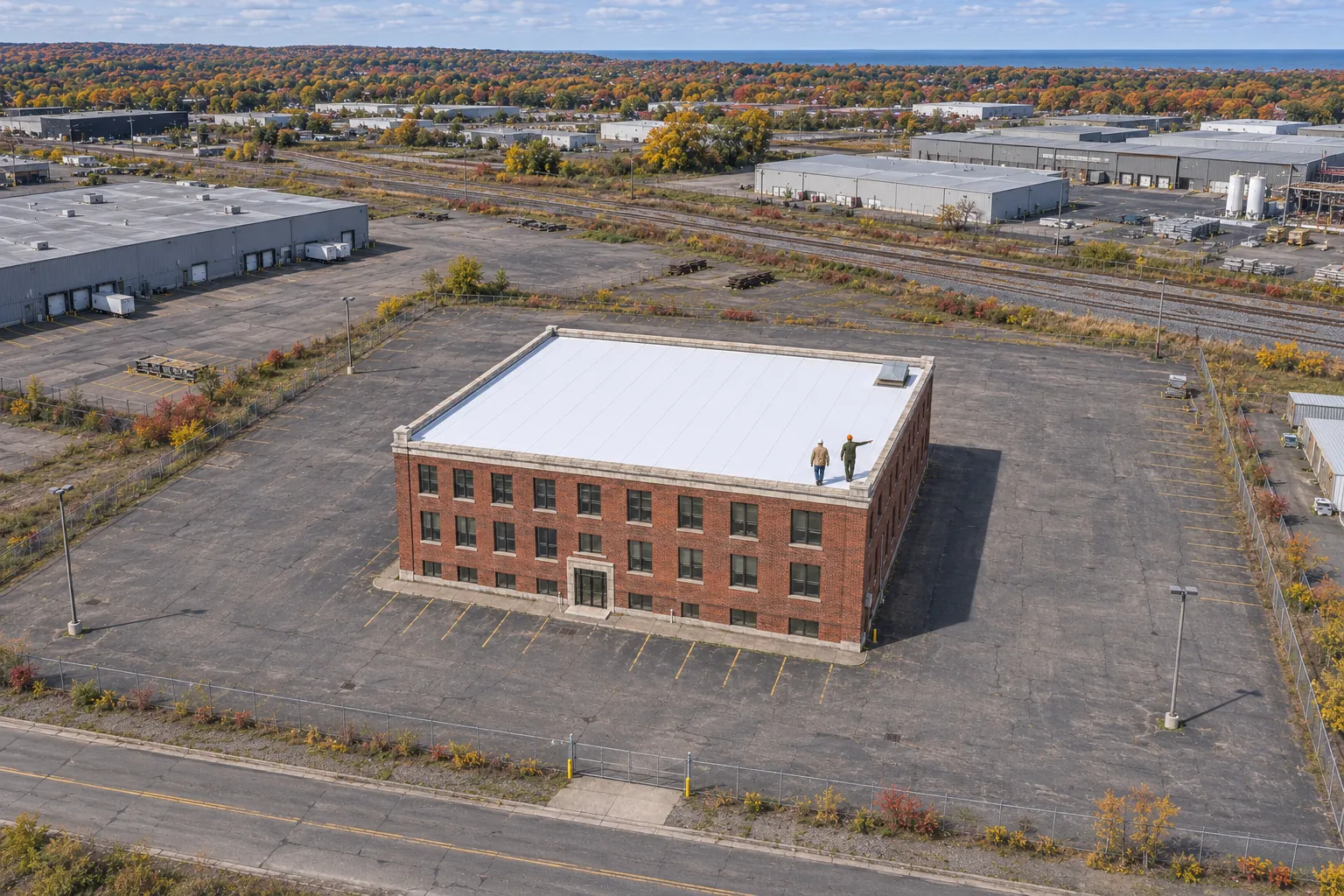
Warren commercial roofing work does not end at the last seam: electricians, HVAC crews, and riggers often cross the roof right after.
We mark the routes each trade uses, lay protection where materials get staged, and agree on how tools and parts move across the roof.
After the other trades finish, we walk the roof again and check the details nearest their work for punctures, scuffs, and loose flashing.
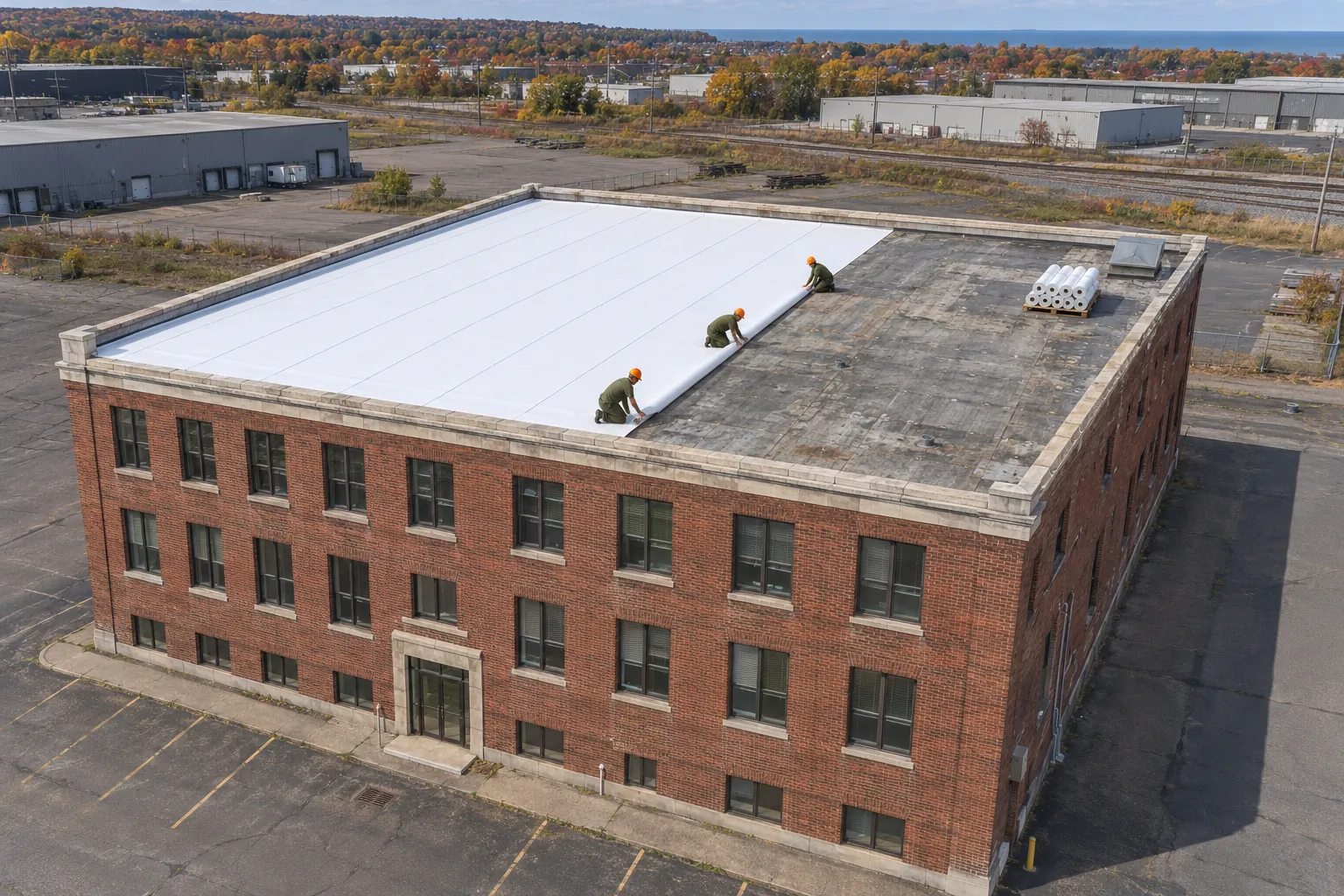
Most damage to a new roof comes in its first months. These are the places it happens.
Screws, bits, and dropped hand tools puncture membrane, and a nail under a heel goes straight through.
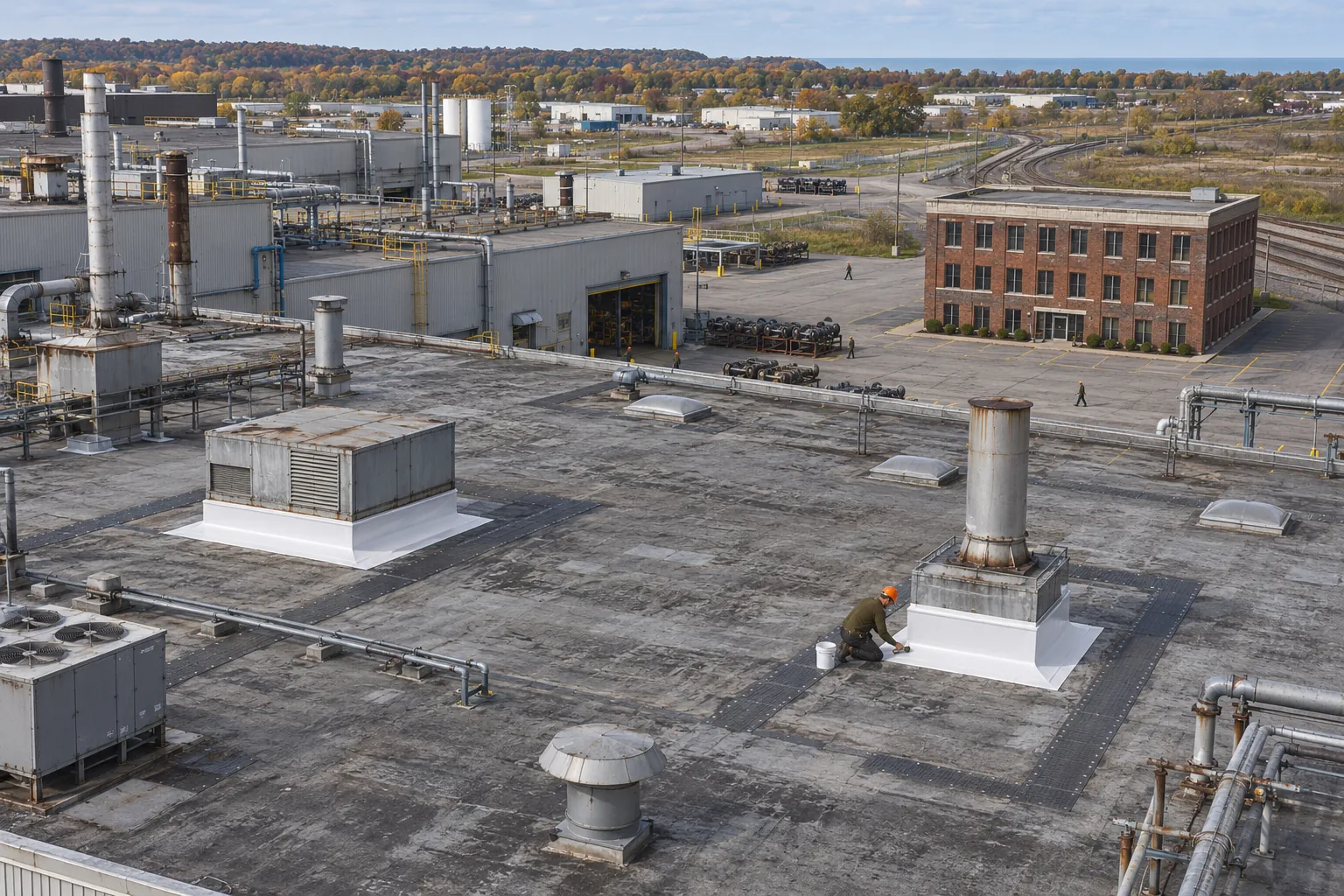
HVAC crews pull flashing loose when they open curb access panels or reset units on the curb.
Electricians run conduit across the roof on blocks that rub through the sheet unless proper supports go in.
Pallets and coils set straight on the membrane crush insulation and leave dents that hold water.
Every trade enters at the same hatch, so the roof around it wears first without a pad.
A roof that stays undamaged after handover is the main gain. Clear responsibility comes next.
Routes, staging areas, and protection are agreed before any trade goes up. The new membrane takes far fewer punctures, and the ones that happen get found on the follow-up walk.
Damage found on the follow-up walk can be traced to the trade that worked in that area, which settles who pays for the repair.
Conduit and pipe run on roof supports that spread their load, instead of blocks that wear through the sheet.
Curb flashing opened by service crews gets checked and closed before the next rain.
Each system can be protected the same way. Some take abuse better than others.
Thicker TPO with cover board below holds up better under foot traffic and dropped parts on Warren plant roofs that see frequent trade visits.
Rubber recovers well from scuffs and takes taped repairs, which suits older buildings where trades work around the roof often.
Busy plant roofs get the heaviest protection: cover board, pads, and pipe supports placed with every trade route in mind.
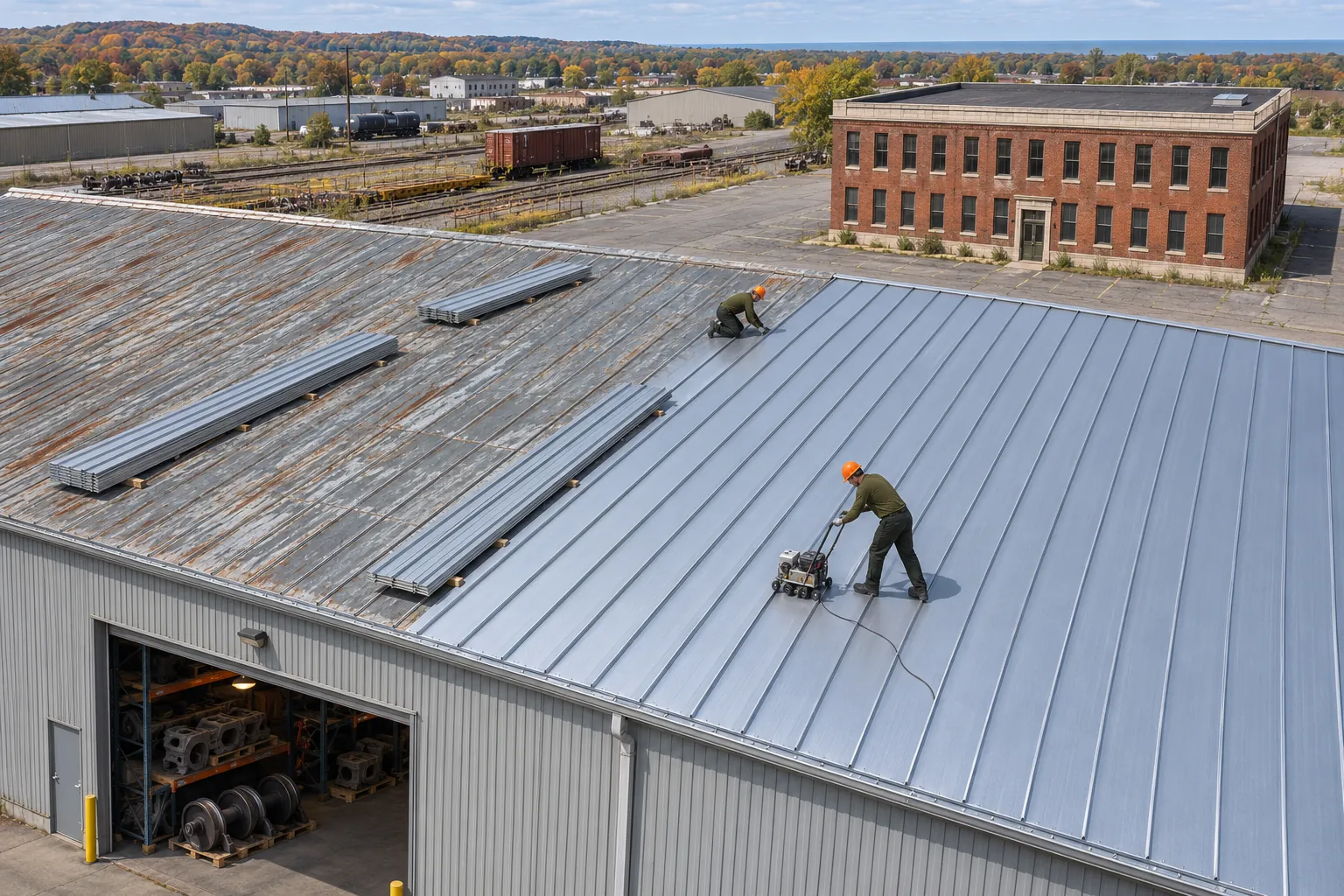
Steel panels shrug off foot traffic but suffer where crews walk on seams or drill new holes, so routes still get marked.
Tell us who comes next and when. Routes and protection get written into the roof scope.
Five steps carry the roof from installation through the other trades.
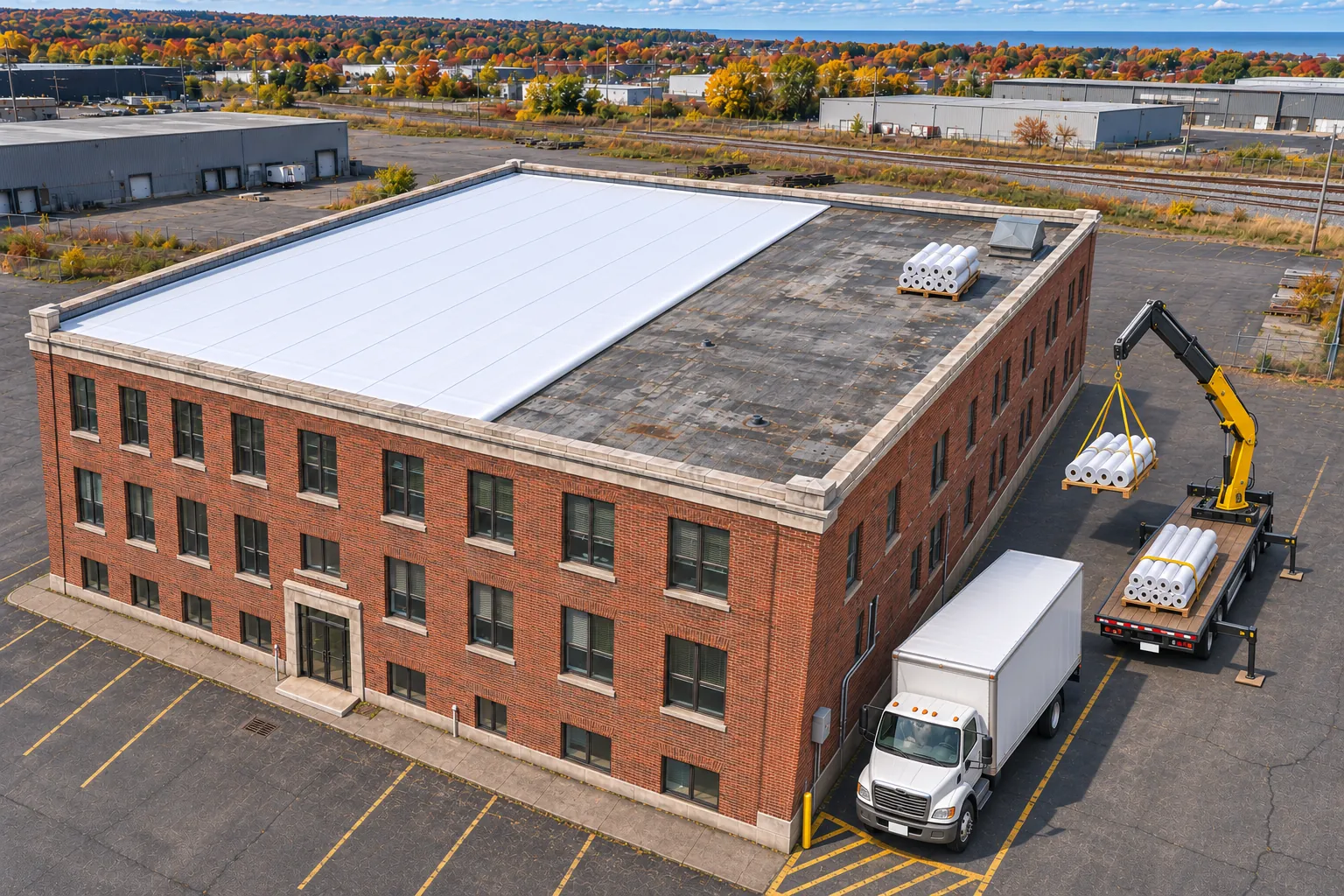
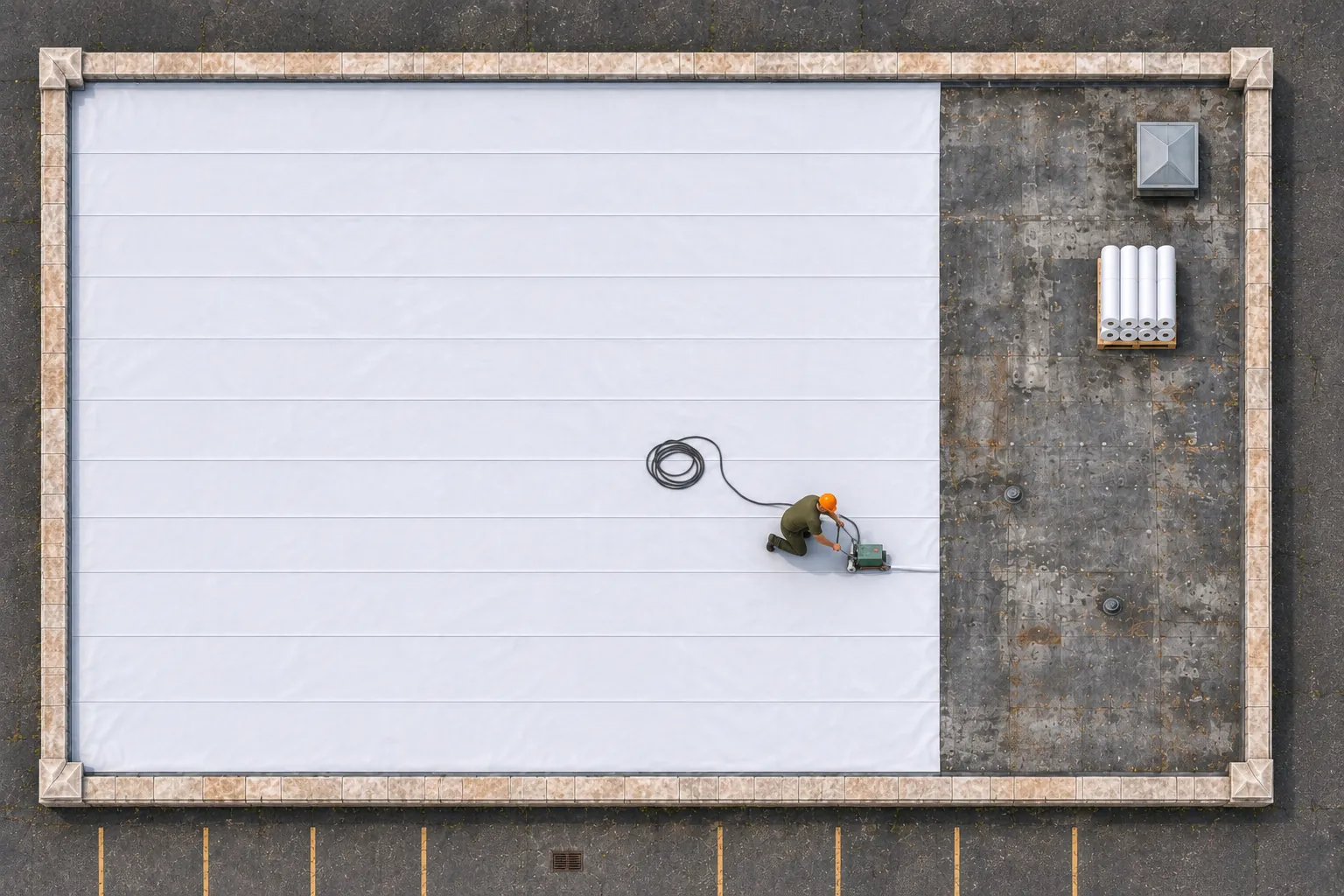
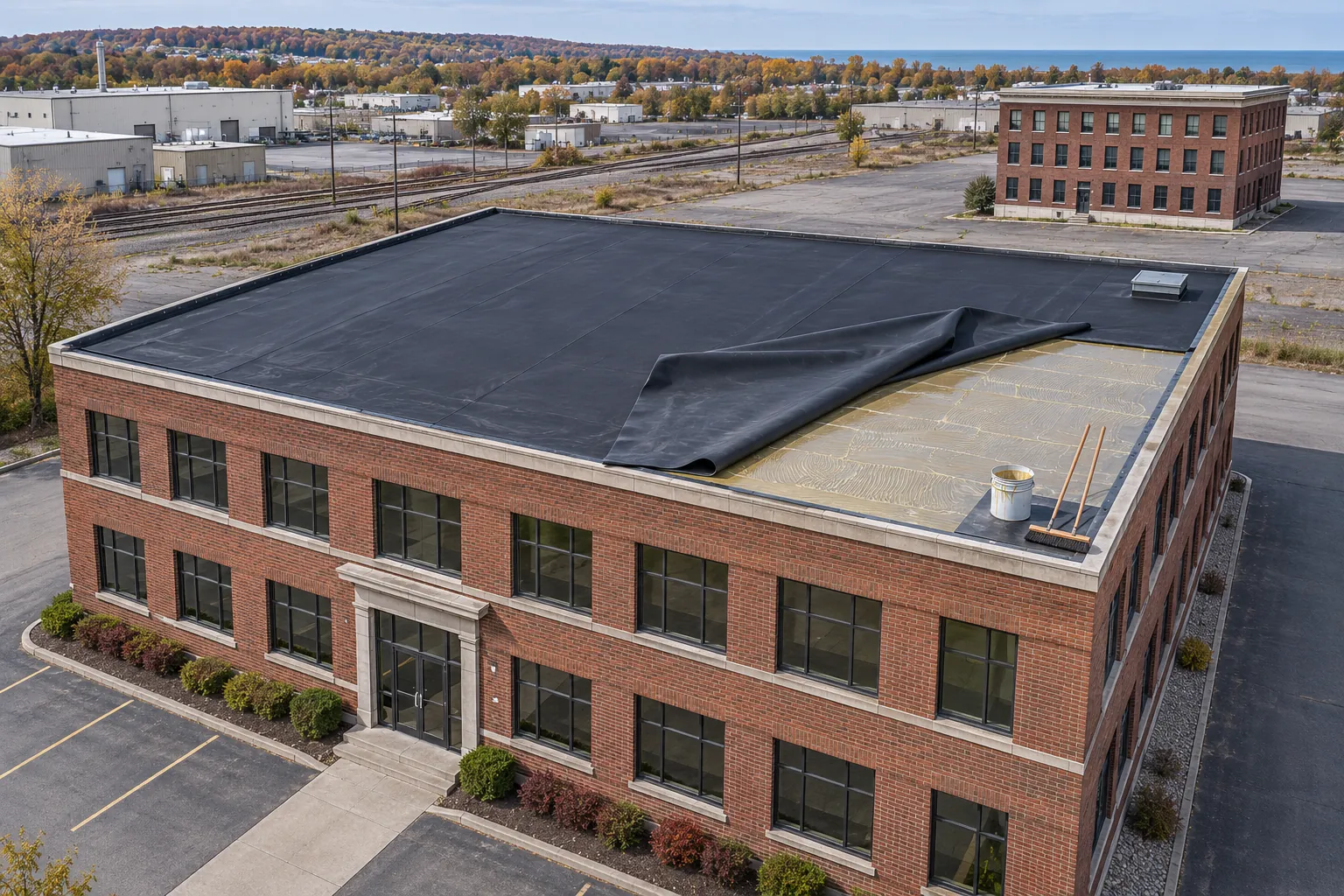
Insulation, membrane, and flashing go down section by section and are probed before the crew leaves.
Each trade gets a marked path, a staging area, and rules for tools and parts on the roof.
Pads, boards, and supports go down where trades will walk, stage, or run conduit.
Electricians, HVAC crews, and riggers finish their work using the agreed routes.
We check every area the trades touched and repair any puncture or loose flashing found.
Building somewhere else in the region? Call us or send us a message. These towns are covered too.
| Town | County | What We See On Roofs There |
|---|---|---|
| Erie Home Base | Erie County | Plastics plants, rail shops, and port warehouses with drifts and iced drains each winter |
| Meadville | Crawford County | Plant roofs replaced in sections timed to process shutdowns |
| Oil City | Venango County | Warehouse roofs reworked to take new rooftop units and curbs |
| Corry | Erie County | Owners weighing two or three bids for the same roof |
| Franklin | Venango County | Leased warehouses where owner and tenant share the reroof plan |
Coordinate access routes, protection, and material handling with every trade on the roof. We point out weak details and recheck the surface after their work. A finished roof still faces tools and traffic, so clear rules matter as much as installation quality.
That is settled between you and the trade. Our follow-up walk documents what we find and where, which gives you the facts to sort it out.
Once a section is sealed and probed. Routes and protection should be down before anyone else goes up, which can happen within hours of the last weld.
Pads along routes to units usually stay for good. Temporary boards at staging areas come up once the trades finish.
Call us first. A roofer sets and flashes the new opening right away, which keeps the rest of the roof sealed.
Heavy rigging and large openings are best done before the membrane, while the roof is open. Lighter work such as wiring a new unit or running conduit can follow, as long as routes and protection are set first and the follow-up walk is booked.
We map every unit, hatch, and panel location with your maintenance lead, then run pads along the shortest paths between them. Pads stop short of drains and laps so water still moves, and the layout goes on the roof plan you keep.
Tell us about the roof and the trades lined up after it. We will plan both.