
Erie Commercial Roofing FAQ
Straight Answers On Systems, Costs, Weather, And Permits
This Erie commercial roofing FAQ answers the questions plant owners, warehouse managers, and landlords ask before a reroof, grouped by topic.
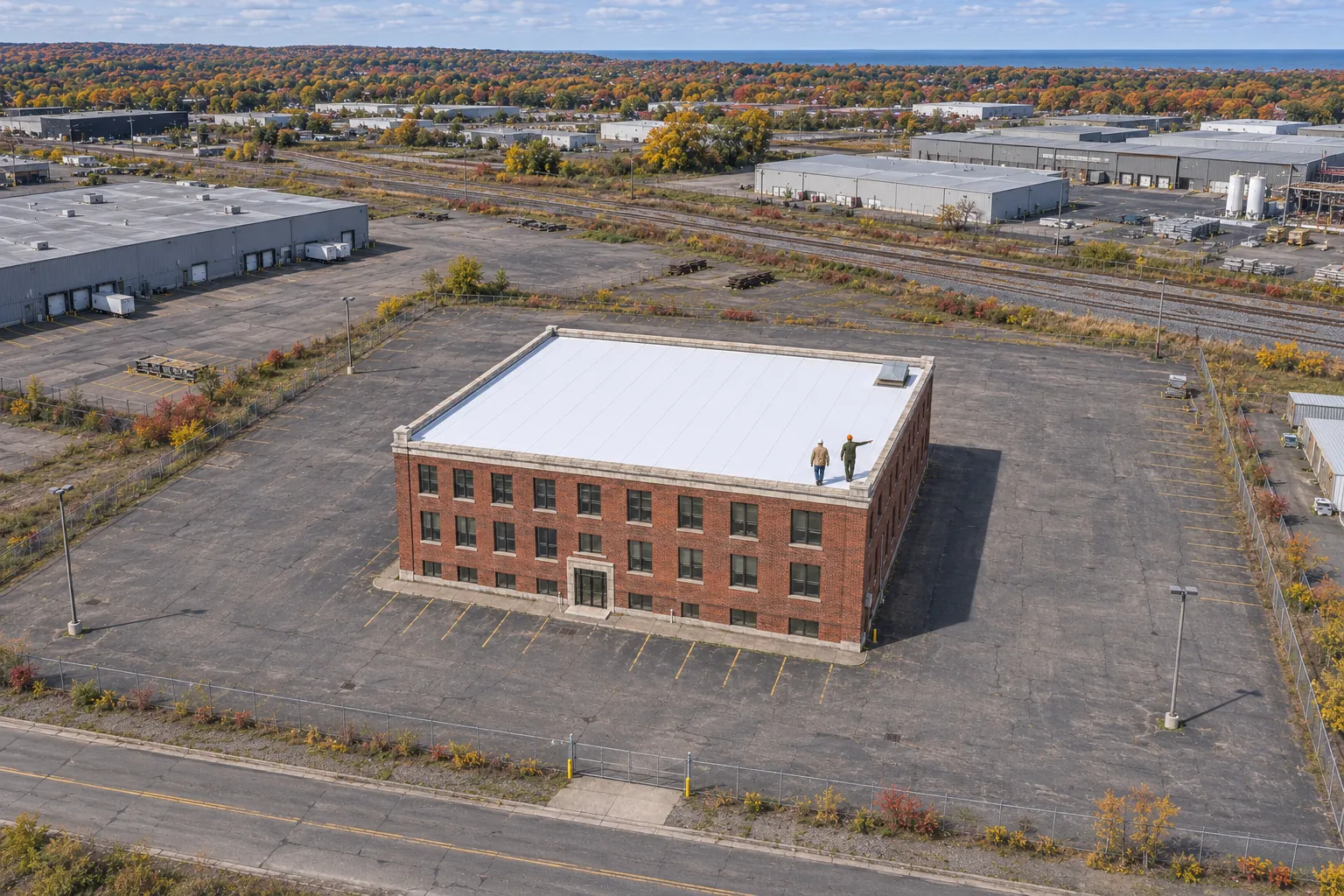
Each answer in this Erie commercial roofing FAQ comes from work on plants, port warehouses, and offices. Jump to a topic:
Planning, Systems, And Plant Roofs: Erie Commercial Roofing FAQ
Costs, TPO, EPDM, and industrial roofs.
Commercial roof planning
- Which winter conditions could postpone a planned Erie plant reroof?
Wet or icy surfaces, unsuitable temperatures and unsafe access can postpone an Erie, PA plant reroof despite a planned production break. We follow the selected system’s installation requirements and arrange weather protection for any opened areas.
The schedule needs flexibility because operational availability and conditions that allow completing the roof assembly are separate parts of the construction plan.
- What should a nearby commercial roofer examine at a port warehouse?
A commercial roofer should examine the port warehouse's roof assembly, drainage and equipment details alongside its operating needs. We review leak history and access before recommending materials or replacement work. The resulting scope should explain how the roof will be investigated and constructed while accounting for loading activity and protection of stored goods below.
- Why isn't one square-foot price enough for an Erie commercial roofing project?
One square-foot price cannot describe the preparation and assembly needed on every Erie, PA commercial roof.
Our inspection sets a building-specific price after reviewing roof size, system and thickness, insulation, tear-off layers, deck repairs, edge metal, flashing, equipment, access, staging and season. Those details distinguish a straightforward covering change from a project with substantial underlying work.
- What should a plant's roof replacement price include before work begins?
A plant's replacement price should identify the inspected work and explain how concealed findings will be handled.
We establish the building's price through a roof inspection covering area, system thickness, insulation, removal layers, deck repair, edge metal, flashing, equipment, access, staging and season. The scope needs to describe more than the new covering visible at completion.
TPO roofing
- Can a plastics plant keep existing roof materials beneath a new TPO system?
A plastics plant can retain existing roof materials beneath TPO when investigation shows they fit the proposed assembly. Our inspection establishes the condition of retained layers, including moisture and their ability to support the new attachment.
Equipment curbs and drains must also work with the new construction, so a dry-looking top surface alone is no proof that the old roof can remain.
- How does cold weather affect TPO seam work near a warehouse roof edge?
Cold weather affects whether TPO seam work can meet the system's welding and installation requirements at the roof edge. We evaluate surface condition and prepare materials according to the selected assembly.
Wind, moisture and access can further limit the work, so the crew needs workable conditions for the complete detail rather than just a brief opportunity to place the sheet.
- Is thirty years a dependable planning life for a new TPO plant roof?
Thirty years should not be treated as a dependable promise for a new TPO plant roof. We assess the proposed thickness, attachment, detailing and maintenance demands when discussing service expectations.
Equipment traffic and unresolved drainage can affect performance, so the owner's plan should include inspections and condition-based decisions rather than assume a fixed replacement date at installation.
- What TPO drawbacks should a rail equipment plant consider before choosing its roof?
A rail equipment plant should consider puncture exposure, service traffic and the need for properly installed seams when evaluating TPO. We review equipment routes and crowded flashing areas before recommending the assembly.
The material can suit a commercial roof, but selecting it does not eliminate maintenance damage or make difficult transitions perform without appropriate design and workmanship.
EPDM roofing
- How should an Erie warehouse judge an older EPDM roof's remaining usefulness?
An Erie, PA warehouse should judge older EPDM through current condition and maintenance history rather than an average lifespan alone.
We inspect seams, flashing and evidence of moisture beneath the sheet before recommending continued use or replacement. The findings should explain whether defects remain repairable or whether the underlying assembly has deteriorated beyond a sensible localized scope.
- Why do EPDM drain connections deserve inspection after repeated freezing and thawing?
Freeze-thaw weather can expose weaknesses around EPDM drains where water remains near defective connections. We inspect the flashing, surrounding slope and underlying materials before choosing the work. The membrane's flexibility does not eliminate drainage problems, so a repair or replacement detail should address the actual connection and the reason moisture keeps returning there.
- What does a rubber roof system include on a port warehouse?
A rubber roof system on a port warehouse includes the EPDM sheet together with its attachment, seams, insulation and flashing.
We plan those components around drainage and equipment access rather than select the sheet in isolation. Understanding the complete assembly helps the owner compare proposals that use the same membrane name but describe different underlying work.
- Why can EPDM seams become troublesome beside frequently serviced equipment?
EPDM seams beside serviced equipment can be affected by traffic, contamination or disturbance of nearby details. We inspect the seam condition and maintenance route before identifying the appropriate work. Repeated surface repairs may miss the cause if technicians continue damaging the same area, so the roof plan should include practical protection and access arrangements.
Industrial roofing
- How should a plastics molding plant choose a roof around its process needs?
A plastics molding plant should choose its roof with process equipment, indoor moisture and maintenance access in view. We inspect the existing assembly and discuss operating restrictions before comparing materials.
The proposed construction needs proper drainage and penetration details, so the decision should reflect the whole facility rather than a membrane preference detached from the building's use.
- Where are walkway pads useful on a rail equipment plant roof?
Walkway pads are useful along planned service routes and appropriate equipment work areas on a rail equipment plant roof. We select compatible details and check that the layout keeps drainage paths open.
The pads support traffic management, but they do not remove the need to keep tools, parts and unplanned access from damaging other roof areas.
- Can one industrial roofing material serve every section of a large plant?
One material can serve several plant sections, but suitability needs to be checked against each area's deck, drainage and exposure. We compare equipment zones and simpler roof fields before recommending the assembly. A shared material choice still needs different details at transitions and penetrations, so uniform appearance should not replace section-specific planning.
- What should be resolved around rooftop equipment before an industrial reroof starts?
Rooftop equipment needs a coordinated plan for curbs, supports and service connections before an industrial reroof starts. We identify what must move and how the roof will be protected while related work occurs. Leaving those decisions until installation can produce inaccessible flashing or force later changes through completed roofing, complicating both construction and upkeep.
Question About Your Own Roof?
Answers here are general. A roof walk with core cuts tells you what applies to your building.
- The property address
- Where water shows up inside
- Roof age, if you know it
- Past repair invoices or photos
Metal Roofs, Weather, And Nearby Towns
Panel choices, Erie winters, permits, and towns we serve.
Commercial metal roofing
- How should an Erie plant evaluate snow loads before choosing metal roofing?
An Erie, PA plant should evaluate the supporting structure and proposed connections before relying on a metal roof under snow. We identify where a structural assessment is needed as part of planning the assembly. Panel selection alone cannot establish capacity, especially where existing damage or changed equipment affects the building beyond the roof covering itself.
- Can retrofit framing create a new drainage slope above a commercial roof?
Retrofit framing can be designed to support a new metal roof slope where the building and proposed connections can carry it. We assess the existing assembly, support arrangement and resulting edge or curb details before recommending it.
The drainage change must work with the whole roof, rather than be treated as a simple panel adjustment over unresolved underlying conditions.
- What causes the most troublesome metal roof details on an equipment-heavy plant?
Equipment-heavy plants can have troublesome metal roof details where penetrations, movement and crowded service access meet. We inspect curbs, fasteners and panel joints before selecting a repair or replacement approach.
The field metal can stay in good condition while these connections cause leaks, making careful detailing more useful than assuming the panel material itself is the main problem.
- Should a port warehouse choose standing seam or exposed-fastener metal panels?
A port warehouse should compare standing seam and exposed-fastener systems through slope, attachment, penetrations and maintenance needs. We review how each assembly would handle the building's details and service access.
Concealed or exposed fasteners are only part of the choice; either roof still needs solid edge connections and a plan for inspecting vulnerable areas over time.
Weather and moisture
- Can a reroof plan address lake-effect snow accumulating around plant equipment?
A reroof plan can account for observed snow accumulation around equipment by reviewing access, drainage and the proposed roof details. If lake-effect snow creates problem areas on an Erie, PA plant, we document those locations during planning.
Heavy wet accumulation also raises questions about support, so appropriate structural evaluation may be needed rather than assuming a new covering increases capacity.
- Can iced gutters and snowmelt influence the details of a replacement roof?
Iced gutters and snowmelt can reveal vulnerable drainage routes that should be considered in replacement details. We examine where water backs up and how the roof connects to gutters or lower sections.
The new assembly should address observed defects, while any structural or drainage-design concerns receive appropriate evaluation instead of being hidden beneath a fresh covering.
- Does a summer hail inspection determine whether insurance will fund a new roof?
A hail inspection documents physical roof findings but does not determine insurance funding. We describe damage extent and the work supported by the roof condition, while coverage depends on the policy and cause of damage.
A useful inspection separates observed defects from assumptions, allowing the owner to discuss the evidence without treating a roofing recommendation as a coverage promise.
- Could humidity in an older brick plant require changes during reroofing?
Humidity in an older brick plant can call for changes to the roof assembly when condensation is part of the moisture problem. We compare interior conditions with exterior leaks before recommending insulation or related details.
Replacing the covering alone can leave dampness unresolved, so the scope should address the identified moisture route rather than assume all water came through the membrane.
- Which reroof details belong in an Erie commercial permit inquiry?
An Erie, PA reroof description should identify removal, retained layers, new materials and related equipment changes for the reviewing authority. The Uniform Construction Code is Pennsylvania's statewide building code framework. We use the actual scope to establish project-specific review needs rather than rely on the general term reroofing to describe every part of the construction.
Nearby commercial projects
- Can a Meadville plastics plant phase roof replacement around process equipment shutdowns?
A Meadville plastics plant can phase replacement around equipment shutdowns where the roof can be divided into workable sections. We coordinate protection and connections with facility staff before selecting stopping points. The construction sequence still needs workable weather and secure daily closure, so equipment availability and roof requirements must be planned together rather than independently.
- What should an Oil City warehouse inspect before adding rooftop equipment during reroofing?
An Oil City warehouse should inspect the supporting assembly and review equipment connections before incorporating new rooftop equipment into a reroof. We coordinate curbs, drainage and service access with the proposed layout.
The equipment's installation needs can affect more than the membrane, so those requirements should be resolved before completing the roof around the planned openings.
- How can a Warren plant prevent other trades from damaging newly installed roofing?
A Warren plant can reduce damage by coordinating access routes, protection and material handling with every trade working on the roof. We identify vulnerable details and review the surface after related work. A completed roof remains exposed to tools and traffic, so clear operating arrangements matter alongside the original installation quality.
- Can a Corry commercial owner compare roof proposals without knowing every material term?
A Corry commercial owner can compare proposals by focusing on what is removed, retained and rebuilt, then asking how each scope addresses the inspected conditions. We explain the assembly in practical terms, including drainage and equipment details. Material names matter, but the owner should also understand the work beneath the covering and any unresolved uncertainties.
- Should a Franklin warehouse coordinate a reroof with its commercial tenant?
A Franklin warehouse should coordinate access, interior protection and operating restrictions with its commercial tenant before reroofing. We describe the work sequence so both parties can plan around affected areas.
Their lease establishes responsibilities, so they should check its terms while arranging the project rather than use the roofing schedule as a substitute for that agreement.
Still Asking After The Erie Commercial Roofing FAQ?
Send the address and what the roof is doing. We will walk it and answer for your building.