Wall Flashing
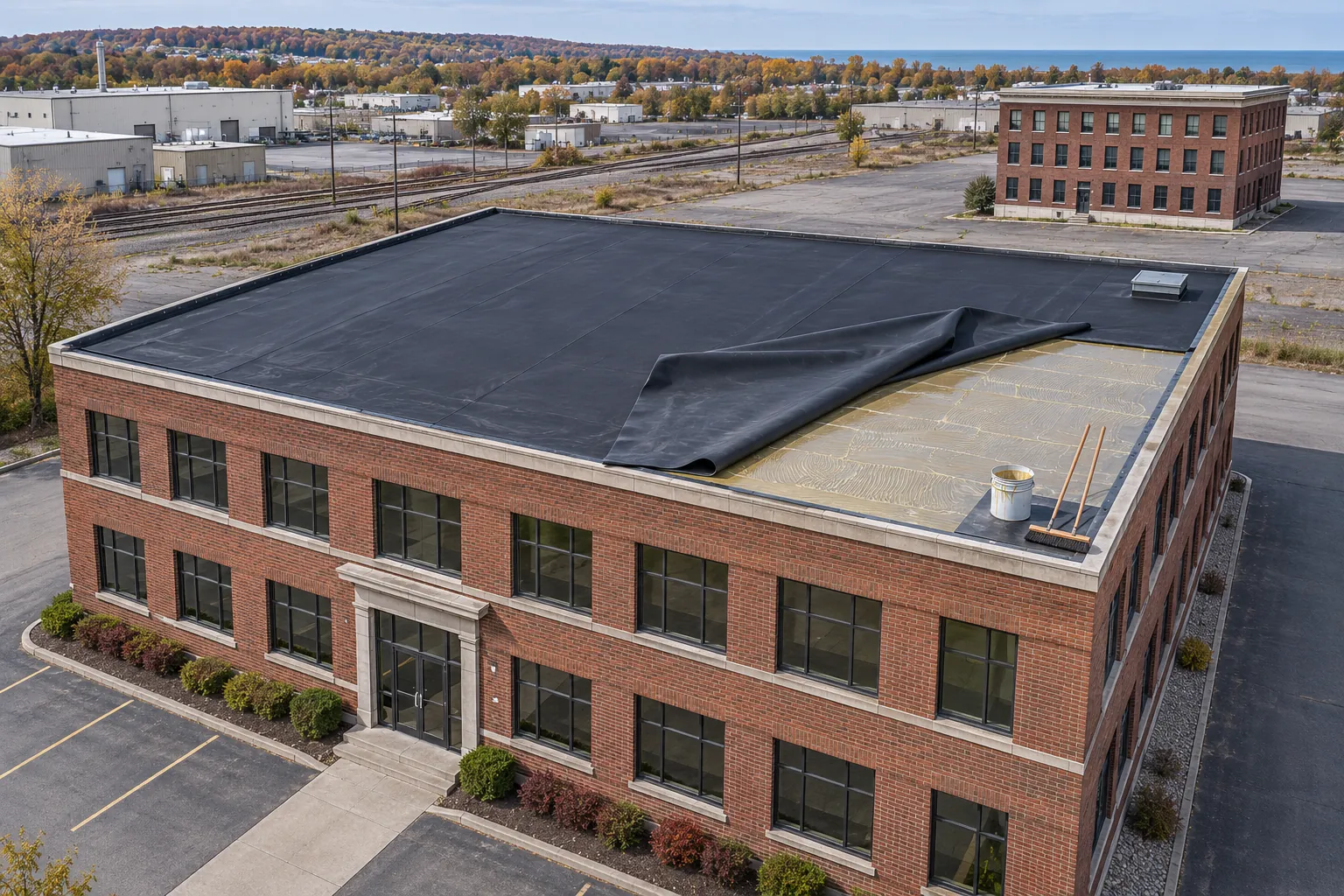
Flashing that stops short of the coping lets wind-driven rain behind it. We run the sheet up and under new cap metal on every wall.

As an Erie TPO roofing contractor, we install heat-welded TPO over new insulation on warehouses, plants, and offices, fastened or adhered to the deck.
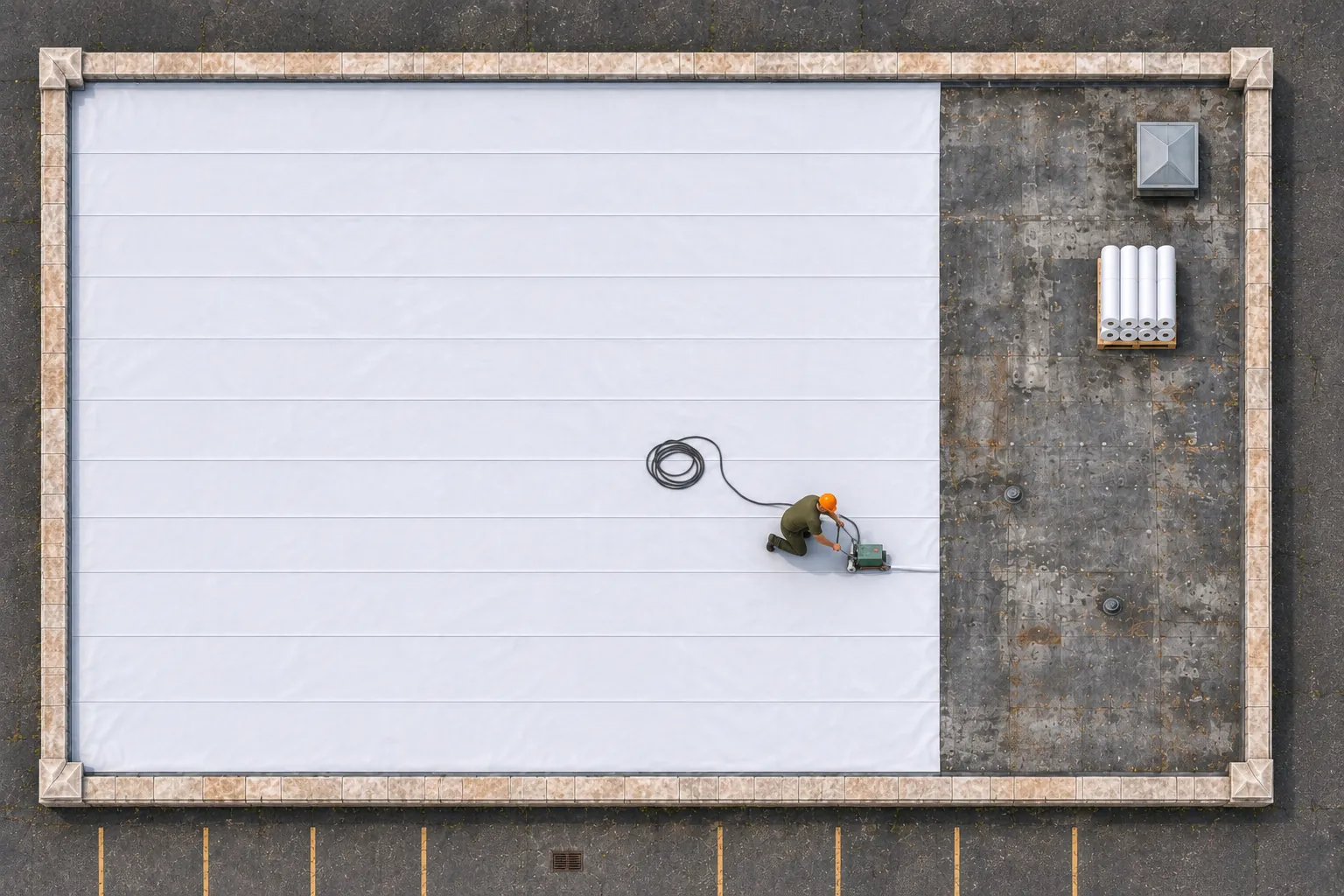
Erie TPO roofing works best over a firm deck and dry board. Compare your roof detail by detail with what a new TPO roof needs.
| Roof Detail | Good Fit For TPO | Check First |
|---|---|---|
| Field | Wide, flat, open runs between units | Dozens of small penetrations close together |
| Old roof | One dry layer that can stay under | Two layers already, or wet board in core cuts |
| Deck | Firm steel or wood with no sag | Rusted flutes near drains and curbs |
| Edges | Parapets with room for new flashing height | Coping too low for the added insulation |
| Traffic | Planned paths to each unit | Daily carts or tools dropped near fans |
New or old, a TPO roof fails at the same five places. Here is what we check at each one.
Flashing that stops short of the coping lets wind-driven rain behind it. We run the sheet up and under new cap metal on every wall.
Cold or dirty welds peel at the edge first. Each seam gets probed with a hook along its full length once it cools.
Sheet that stops loose around a drain lets meltwater travel under it. New clamping rings seal the TPO to the bowl.
Inside and outside corners crack when flashing is folded instead of using molded corners. Prefabricated pieces go on every curb.
Fastener plates pull through soft insulation in high wind. Cover board or extra rows at perimeter and corner zones hold the sheet down.
The membrane name stays the same; the attachment and thickness change with the building.
Screws and plates hold the sheet at the laps, which keeps adhesive off cold decks and lets work run later into the fall.
Bonding the sheet across the whole field keeps it flat in lake wind and suits roofs with many curbs and corners.
A new TPO roof over one dry older roof skips most tear-off, after core cuts confirm the old layer can stay.
An 80 mil sheet with walkway pads stands up better where techs reach units every week.
Welded seams are the main gain. The rest shows up in summer heat and in how the roof handles foot traffic.
Every lap is heat-welded, so the field turns into one continuous piece of membrane. Wind and meltwater have no glued edge to work under, and a probe test finds a weak weld right away.
A white membrane reflects summer sun, which helps offices and second-floor storage under the deck stay cooler in July.
Fresh board under the sheet replaces wet layers and holds more heat in the building through Erie winters.
Punctures get a welded patch of the same sheet, which bonds to the roof as one piece years later.
A TPO recover could save the tear-off. Book core cuts first so the old layer is proven dry before anyone prices it.
Five steps take a TPO roof from the first walk to the final weld check.
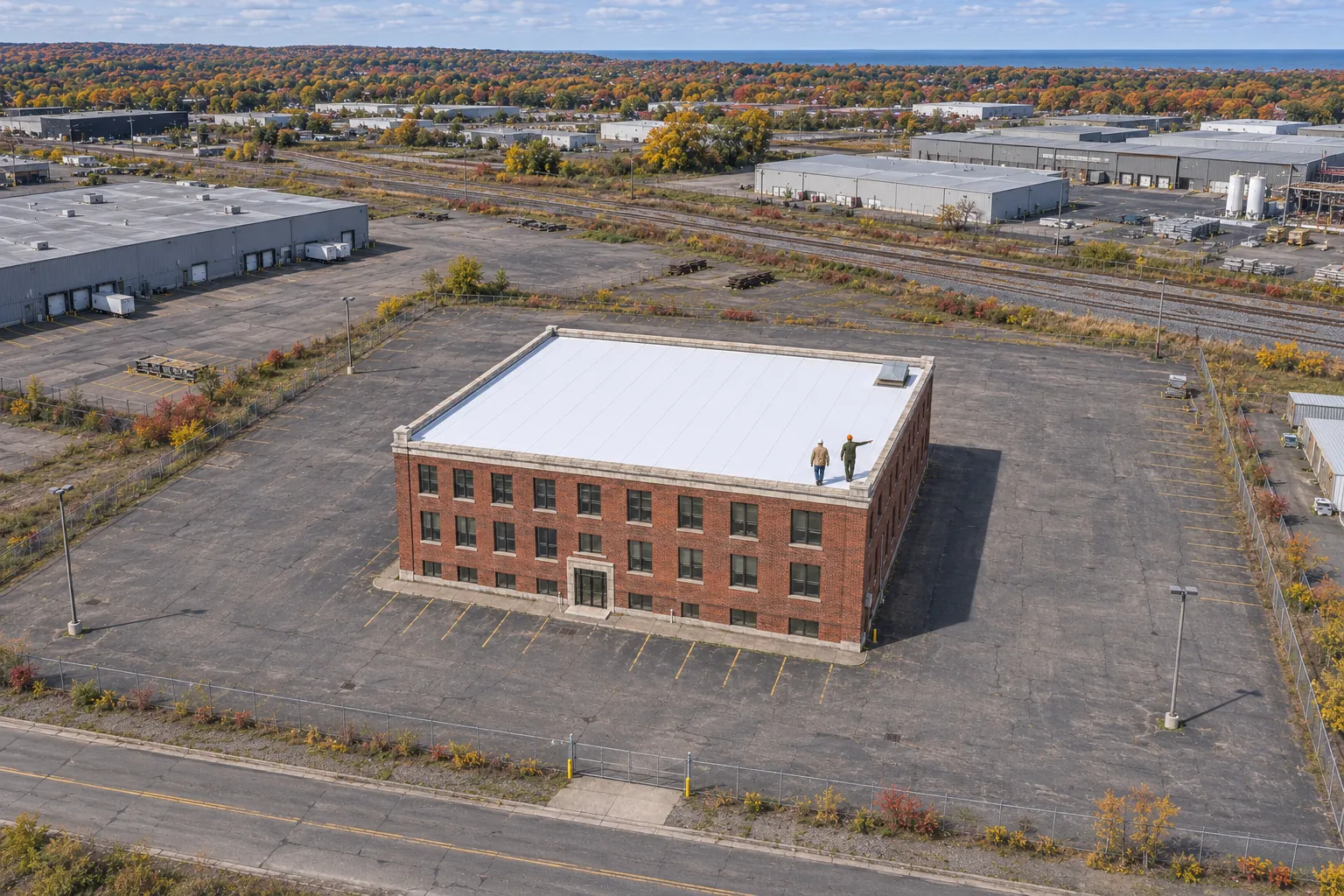
Cuts at drains and low bays show whether the old roof can stay under a recover or must come off.
Wet board and old layers come off section by section, and rusted flutes get plated before insulation goes down.
Tapered board moves water to the drains, and cover board protects the sheet from heel and tool damage.
Sheets are fastened or adhered, then every lap is hot-air welded and left to cool before testing.
Curbs, walls, and drains are flashed with molded pieces, and each weld is probed along its full length.
Some buildings suit another system better than TPO. These are the usual alternatives.
Rubber suits older buildings with many walls and corners, where wide flexible panels fold into details with fewer seams than narrow TPO rolls.
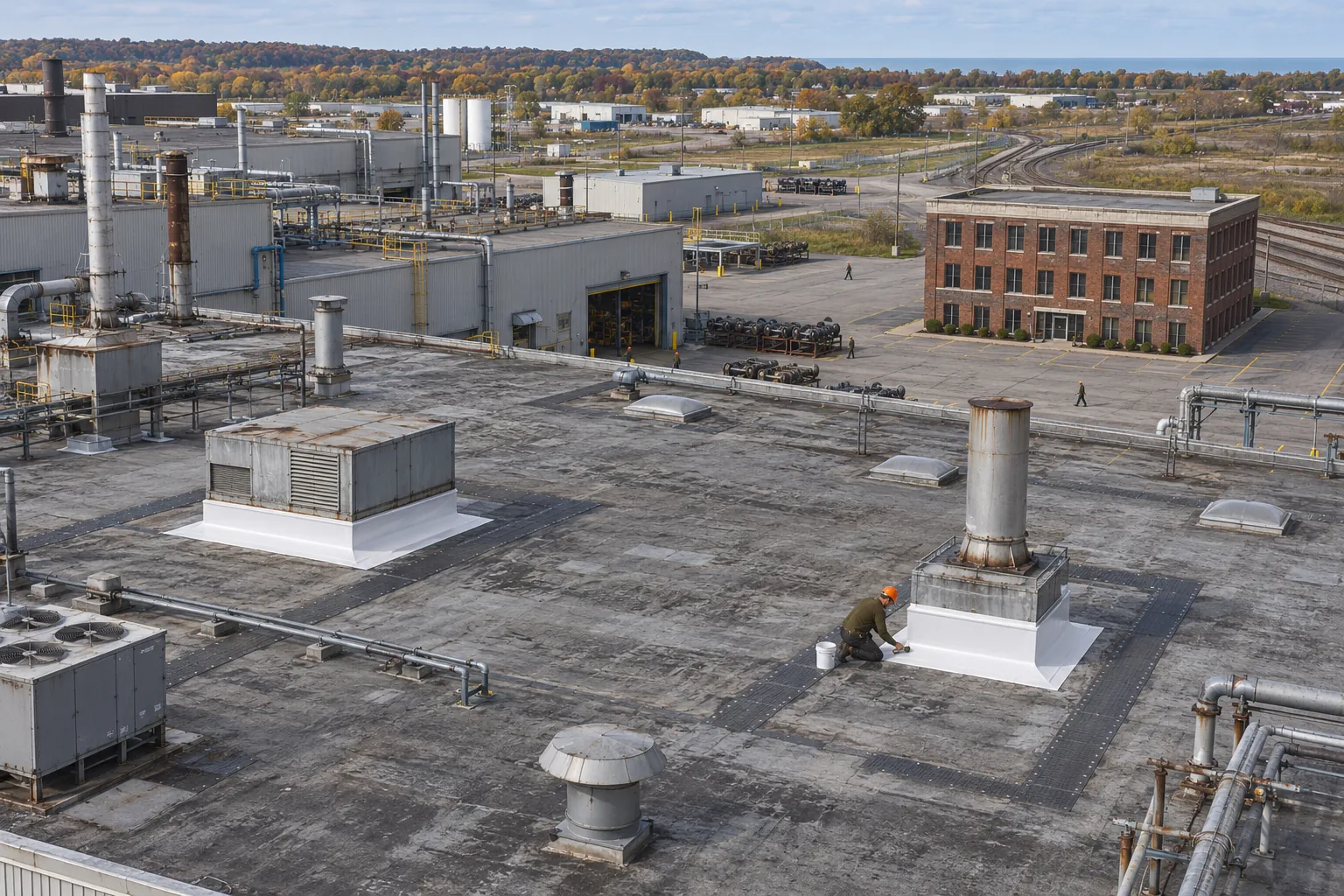
Plants with stacks, fans, and pipe racks need heavier parts around the same membrane, so the roof is planned around the equipment first.
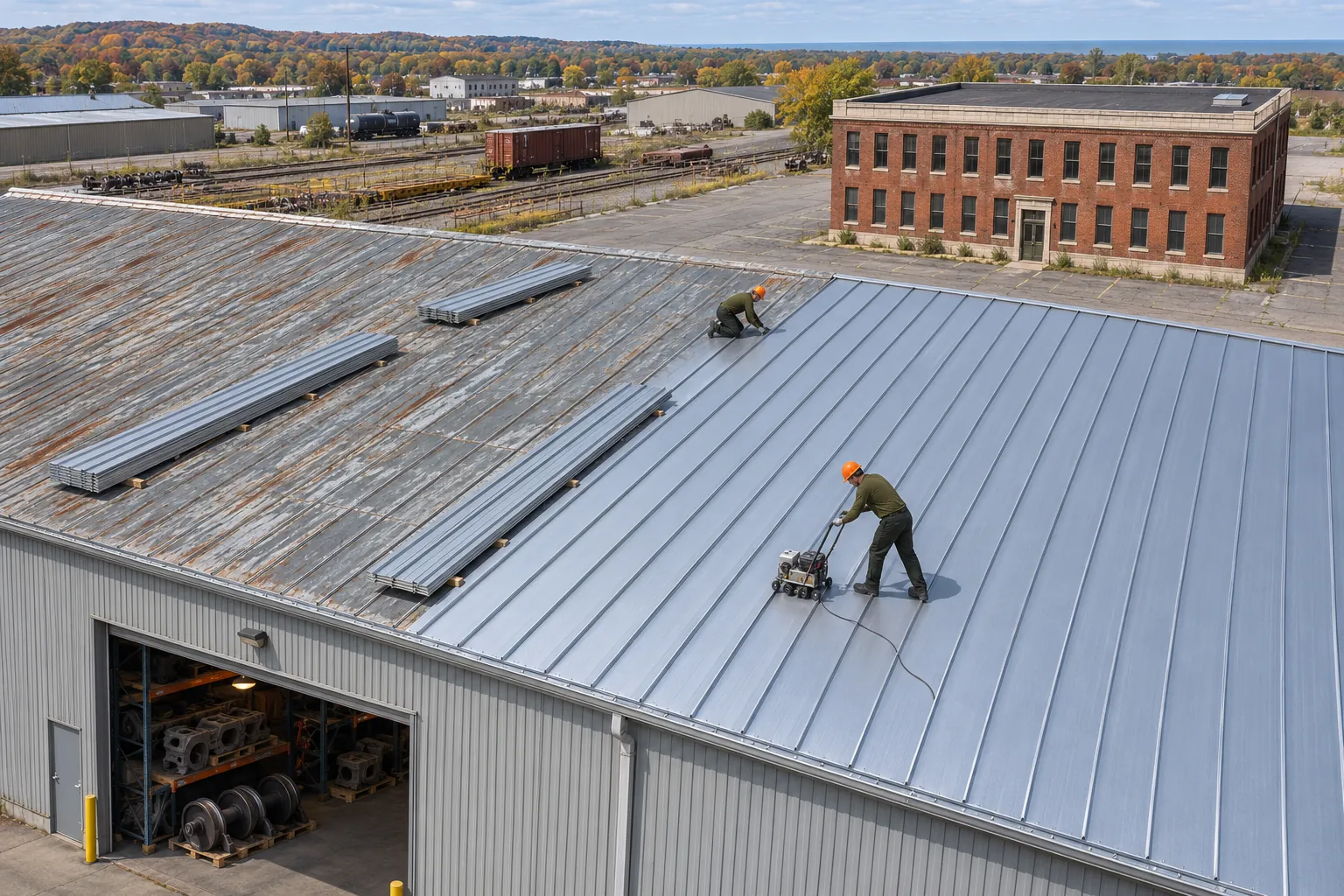
Sloped steel buildings next to a flat warehouse often need panel repair or new standing seam rather than a membrane.
Yes, when core cuts show the old layer is dry and firm enough to hold the new attachment. Moisture in the old board, or a second layer already there, means tear-off. Curbs and drains also have to line up with the new roof height.
Cold changes how welds form, so the crew checks surface condition, keeps materials warm, and test-welds before running seams. Wind, frost, and wet edges stop the work. Edge details get finished in one stretch of good weather.
Thirty years is a hope to plan around carefully. Sheet thickness, attachment, detailing, foot traffic, and drainage all change how long it lasts. Plan for yearly inspections and repairs based on what they find, and decide on replacement from the roof condition.
Punctures from tools and parts, heavy service traffic, and seams that only hold if welded well. Crowded flashing areas need careful detailing. Thicker sheet, cover board, and walkway pads reduce the damage, and inspections catch the rest early.
Sixty mil is common on open warehouse fields with light traffic. Eighty mil makes sense near rooftop units, along service paths, and anywhere carts or dropped tools are likely, because it resists punctures better.
Tell us about the roof and the building. We will cut into the layers and write the TPO scope.