Screw Rows
Washers dry out and screws back out as panels expand and contract. Loose heads at purlins are the most common leak on older shops.
As an Erie commercial metal roofing contractor, we install, repair, and maintain standing-seam and exposed-fastener steel roofs and retrofit framing.
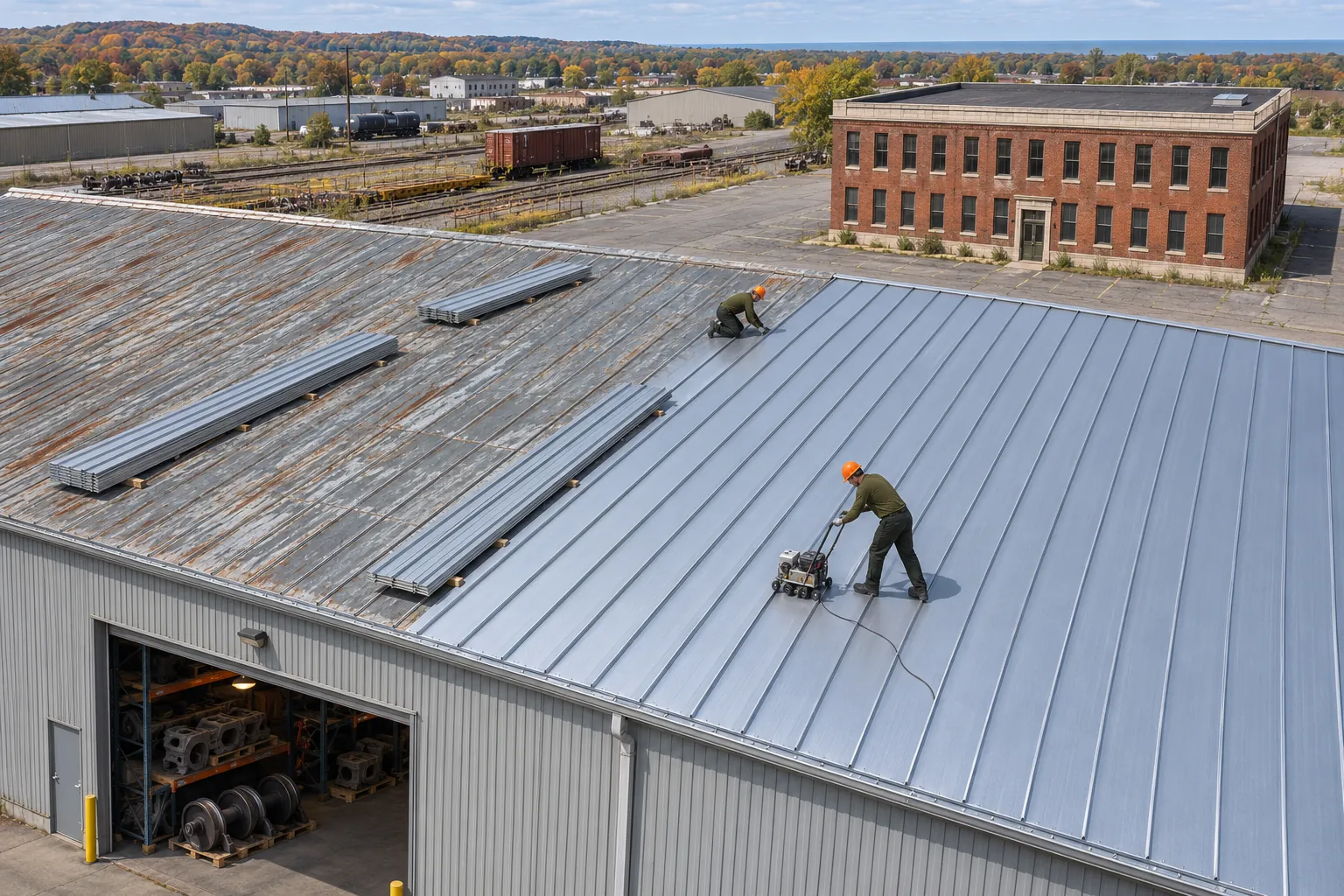
Erie commercial metal roofing comes in two main panel types. The right one depends on slope, attachment, penetrations, and upkeep.
| Roof Detail | Standing Seam | Exposed Fastener |
|---|---|---|
| Attachment | Concealed clips let panels move | Screws through the panel face |
| Slope | Works down to low slopes | Needs more pitch to shed water |
| Upkeep | Seams and clips checked yearly | Screws and washers checked and replaced |
| Penetrations | Flashed curbs at panel seams | Boots and closures at screw rows |
| Common use | Plant additions and long roof runs | Storage buildings and shop roofs |
Field panels often stay in good shape while the connections leak. These are the five places we check first.
Washers dry out and screws back out as panels expand and contract. Loose heads at purlins are the most common leak on older shops.
Sealant at panel end laps fails and lets water wick uphill under the lap. Rust streaks below a lap give it away.
Curbs and pipes crowded near panel joints are hard to flash well. Leaks under units often trace back to a poorly cut panel.
Ice at the eave backs meltwater under trim and closures. Stained fascia and wet wall tops point to this zone.
Surface rust becomes holes where water sits on panels near drains or low spots. Daylight from inside shows where it has gone through.
Metal roof jobs range from tightening screws to building a new pitched roof above a flat one.
Concealed-clip panels for plant additions and long runs, seamed on site so the panels can move with temperature.
Backed-out screws replaced with oversized fasteners and new washers, and failed end laps resealed.
Light steel framing set over a ponding flat roof to carry new sloped panels, after the structure is reviewed.
Rusted-through panels swapped for matching profiles, so the rest of a sound field keeps working.
Shedding snow and water is the main gain. Long service from well-detailed connections comes with it.
Sloped steel panels move meltwater and rain off the building instead of holding it on a flat field. Over a ponding flat roof, retrofit framing turns standing water into runoff.
Standing-seam clips let steel expand and contract through Erie temperature swings without loosening screws.
Screw and lap repairs extend the life of an older exposed-fastener roof without removing panels.
Yearly checks at laps and penetrations find surface rust before it goes through the panel.
Retrofit framing could add slope above it. Book a walk so the structure and the drainage get reviewed first.
Metal jobs add a structural check before any panel is chosen.
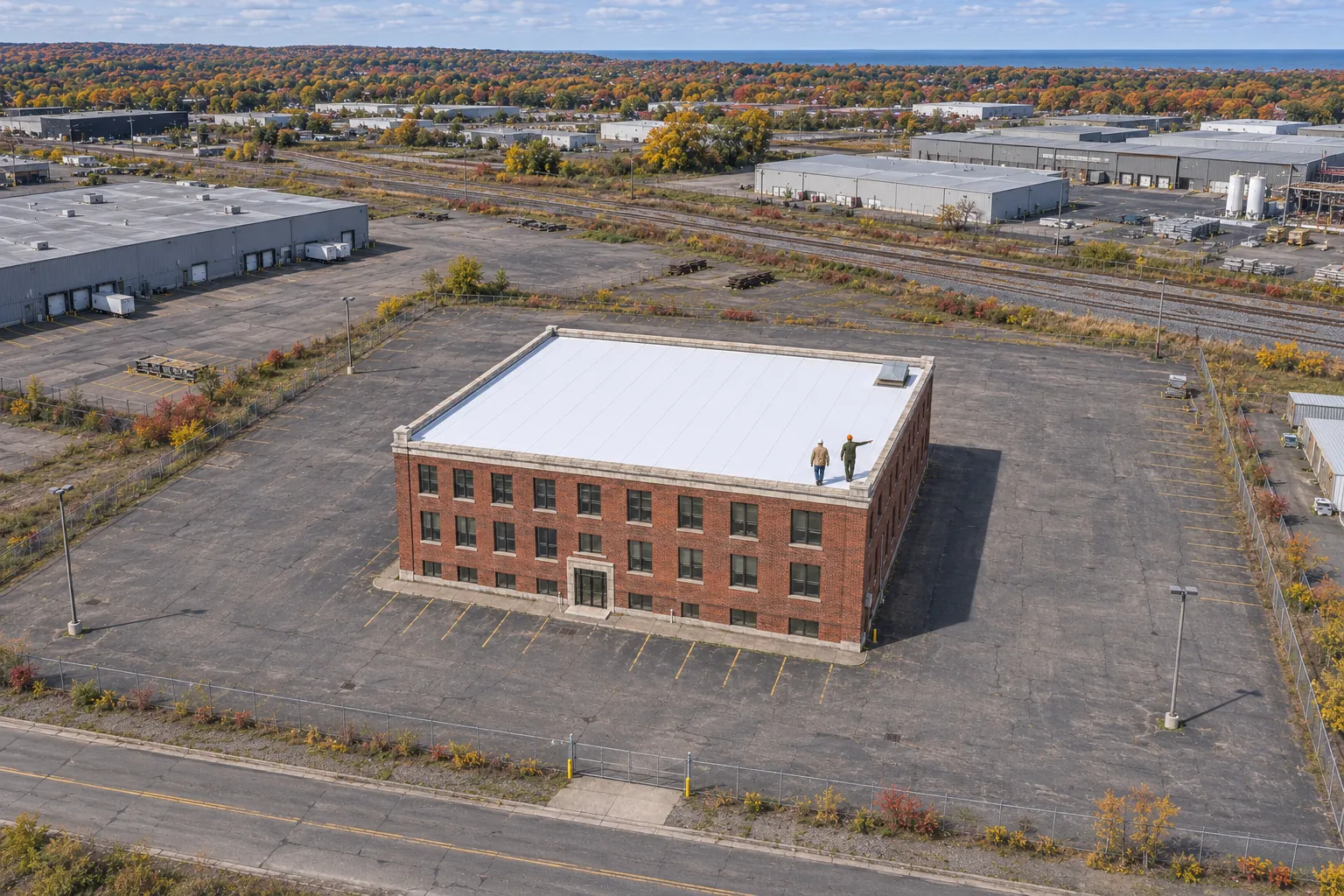
Screws, laps, curbs, eaves, and rust spots are checked across the roof and matched to stains inside.
Where snow load, new framing, or changed equipment is involved, an engineer reviews the frame before panels are picked.
Panel type, gauge, clips, and flashing at each penetration are set to suit the slope and the building.
New panels are set and seamed, or failed screws, laps, and panels are replaced on the existing roof.
End laps, ridge caps, eave trim, and curb flashing are checked before the crew leaves the roof.
Low-slope roofs on the same property usually take one of these.
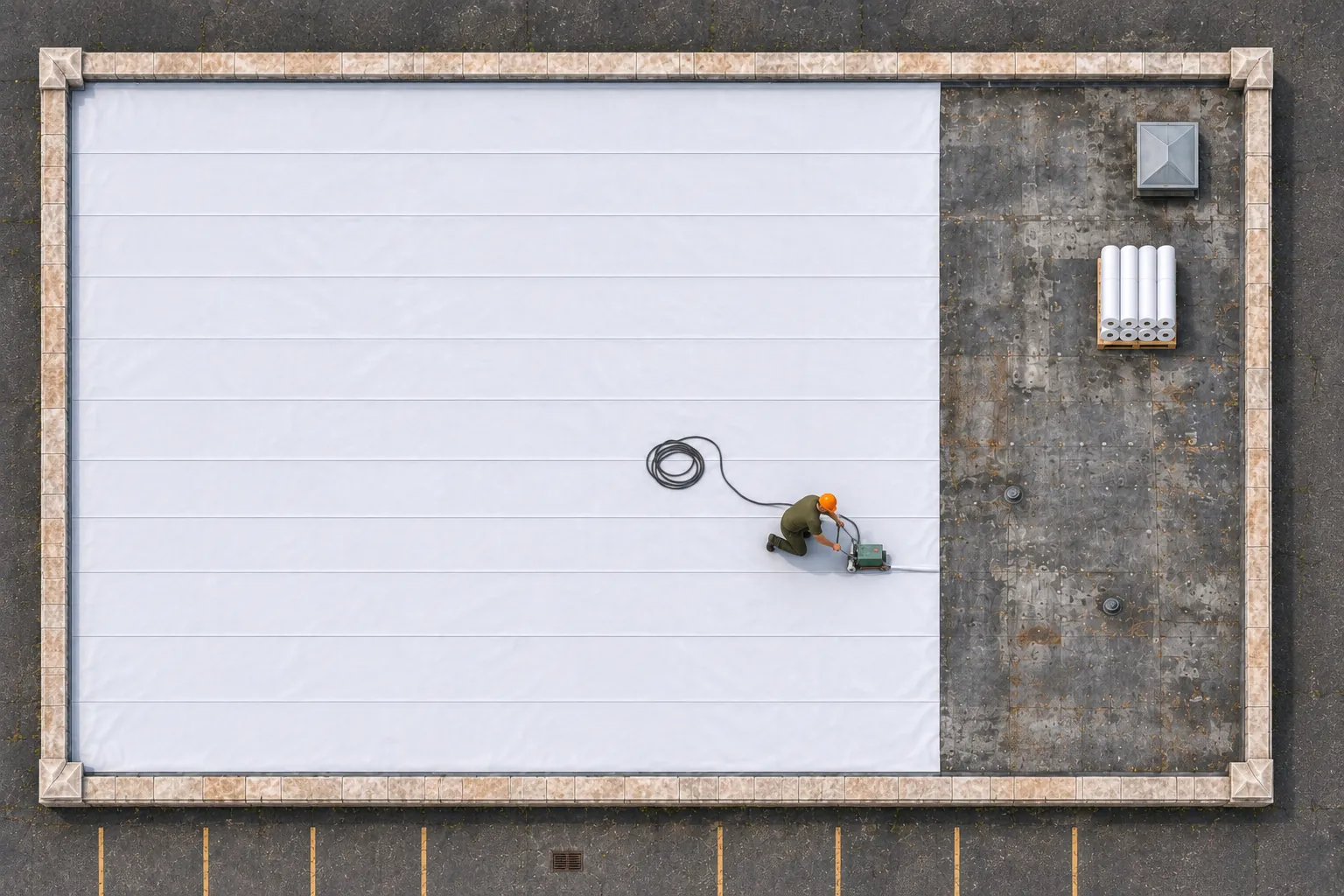
Flat sections next to a metal building often get welded TPO over new tapered insulation to move water to the drains.
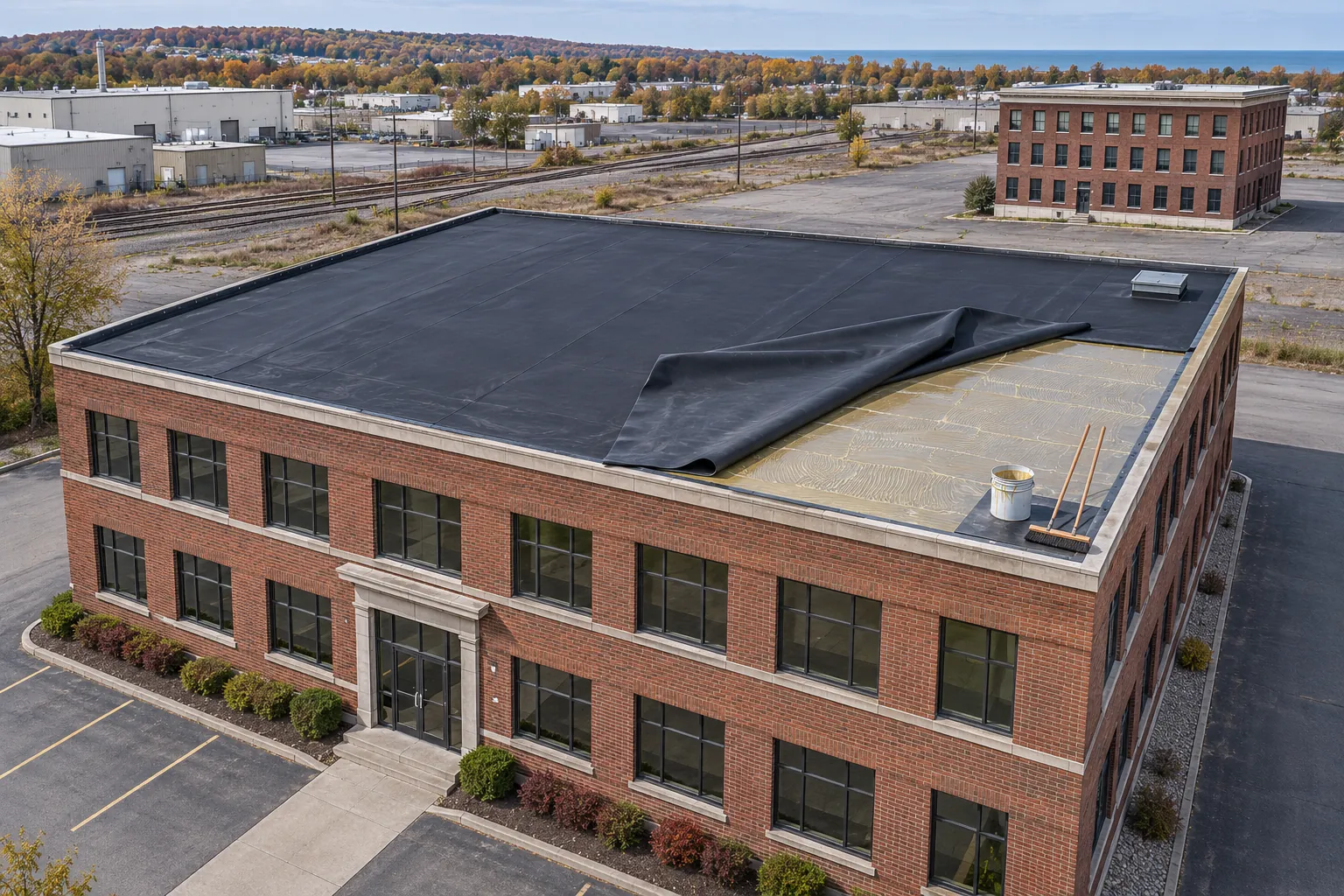
Rubber fits flat or low-slope sections with many corners where flexible panels beat narrow rolls.
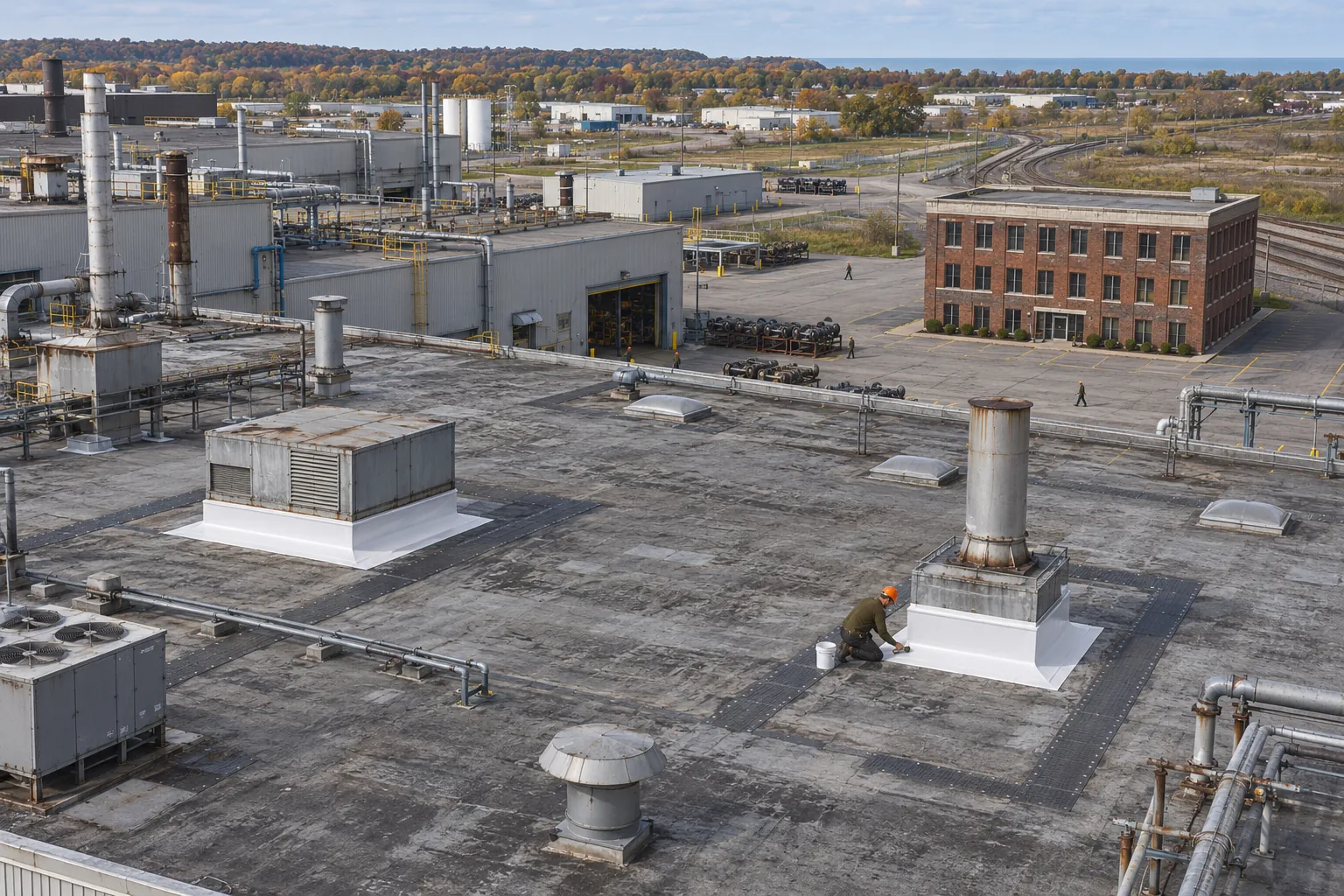
Plant roofs crowded with stacks and fans get a membrane assembly built around the equipment instead of panels.
Check the supporting structure and the connections before counting on a metal roof under snow. We point out where an engineer needs to review the frame. Panel choice alone cannot set capacity, especially where old damage or new equipment changes the load.
Yes, where the building and the connections can carry it. We check the existing roof, the support layout, and the edge and curb details first. The new slope has to work for the whole roof, not just the panels laid over it.
Penetrations, panel movement, and crowded service access meeting in one spot. We inspect curbs, fasteners, and panel joints before choosing repair or replacement. The field panels often stay in good shape while these connections leak.
Compare slope, attachment, penetrations, and upkeep. Concealed or exposed fasteners are only part of the choice; either roof needs solid edge connections and a plan to inspect the weak spots over time. Low slopes lean toward standing seam.
Yes, when the rest of the field is solid. Rusted-through panels come out and matching profiles go in, with new closures and fasteners at the laps. If rust shows on most panels or the purlins below have corroded, a full replacement makes more sense than chasing panels one at a time.
Once a year, and after any hard winter. Look for backed-out heads, cracked washers, and rust at screw rows. Replacing failed screws with oversized fasteners and new washers stops most leaks on older steel roofs.
Tell us about the panels, the slope, and where it leaks. We will walk it and write the scope.