Process Exhaust
Molding lines vent warm, oily air through roof fans. Residue around the curb softens nearby membrane and hides cracks in the flashing.

As a Meadville commercial roofing contractor, we replace plant and warehouse roofs in sections timed to your process shutdowns and maintenance weeks.
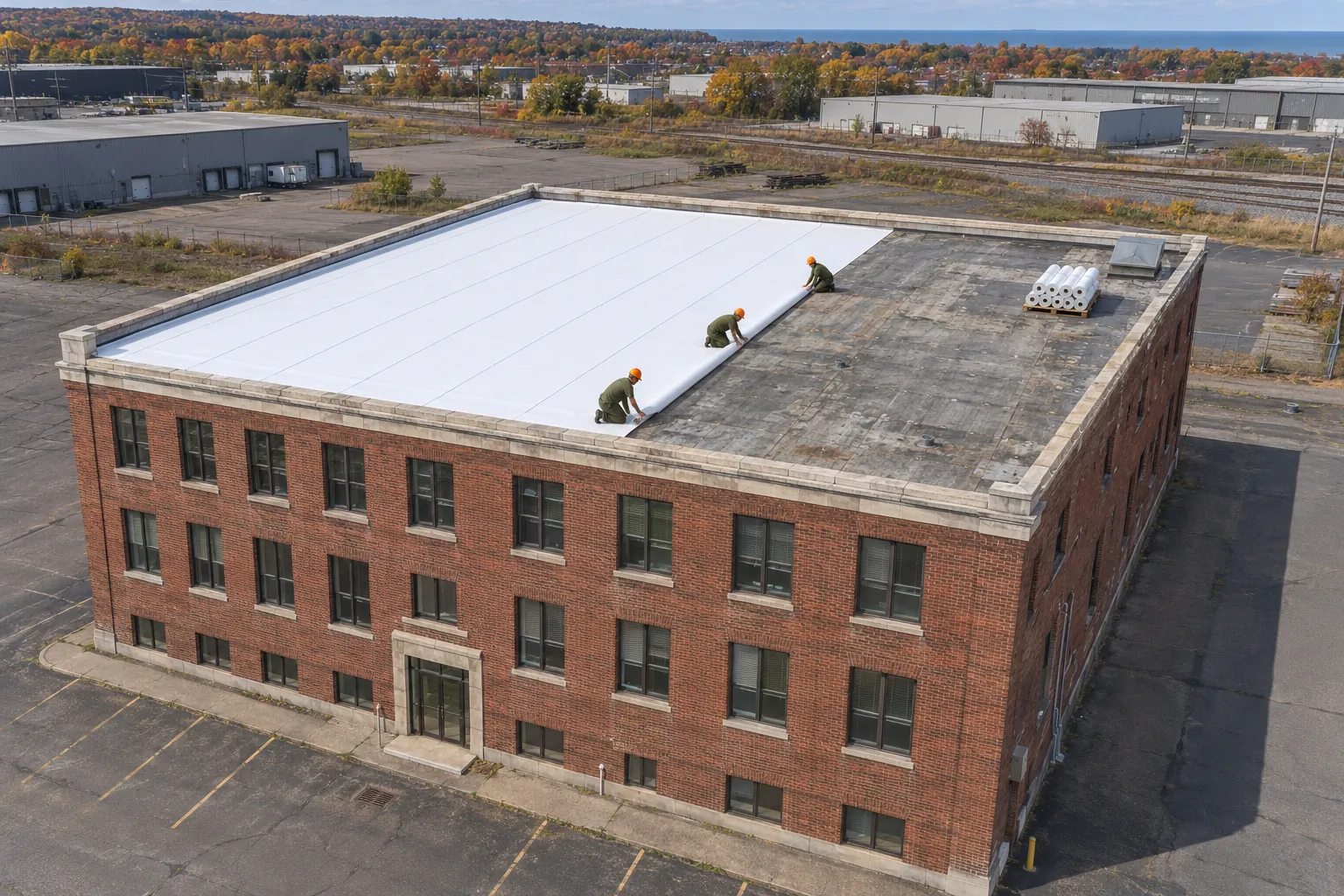
Meadville commercial roofing on a running plant works when the roof sections and the shutdown calendar are planned together.
We split the roof into sections that can be opened, rebuilt, and sealed within each shutdown, with stopping points at walls, expansion joints, or curbs.
Your staff tells us which lines sit under each section. We set protection and temporary tie-ins so a short shutdown never leaves an opening overnight.
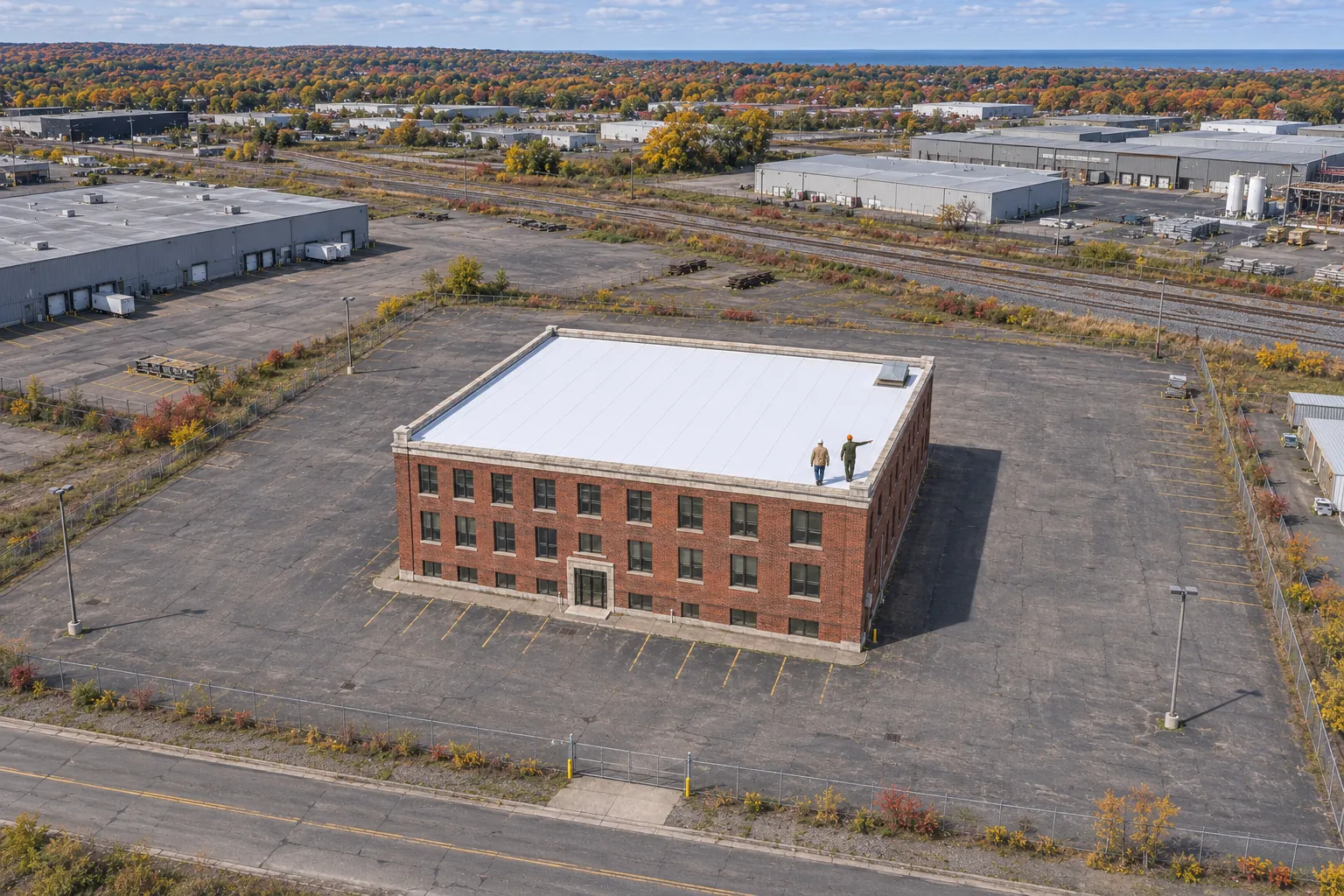
Plants that run long hours wear their roofs in the same places. We check these zones before setting any section lines.
Molding lines vent warm, oily air through roof fans. Residue around the curb softens nearby membrane and hides cracks in the flashing.
Steam and cooling water raise humidity over some lines, and that moisture condenses under the deck and soaks the board.
Earlier partial reroofs left tie-ins between roof systems. Those joints open first as the two roofs move differently.
Drains over production floors back up when baskets clog with leaves, and the overflow shows as drips onto equipment.
Maintenance visits to fans and units wear a track across the membrane, often right over the busiest line below.
Production that keeps running is the main gain. Cleaner tie-ins and a roof plan for the next phase follow.
Only the section over idle lines is opened. Everything else stays covered and dry, and each opened section is sealed before the crew leaves, so production restarts on schedule after the shutdown.
Every phase ends at a planned stopping point, which leaves a straight, flashed joint for the next section to tie into.
Sections not reached this year are marked on a roof plan with their condition, so the next shutdown starts already scoped.
Core cuts before phasing show which bays are wettest, so the worst sections go first.
Plant roofs here usually take one of these four systems. The phase plan stays the same whichever you pick.
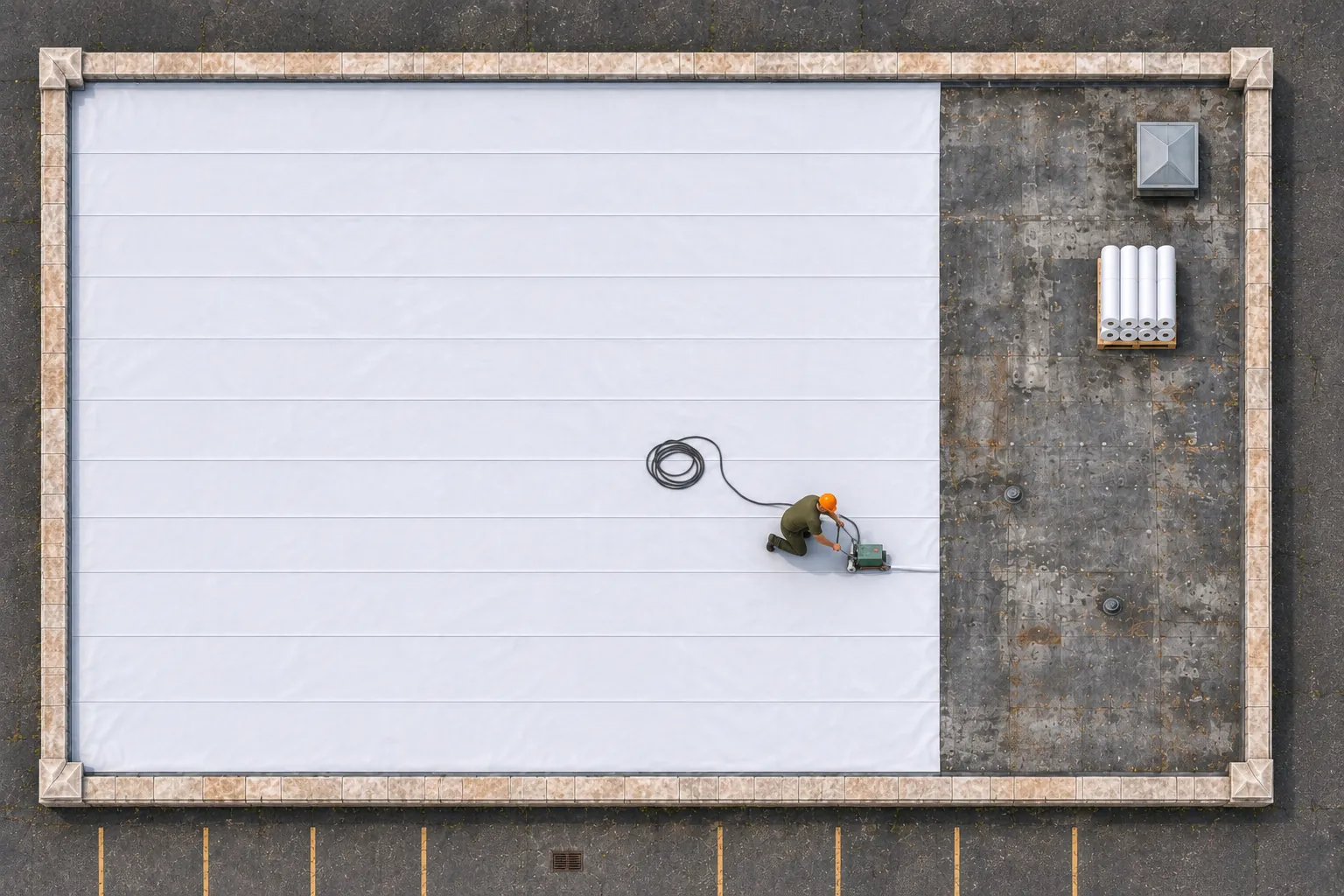
Welded TPO suits the wide flat roofs over Meadville warehouses and plant offices, and each section ties cleanly into the next with a welded joint.
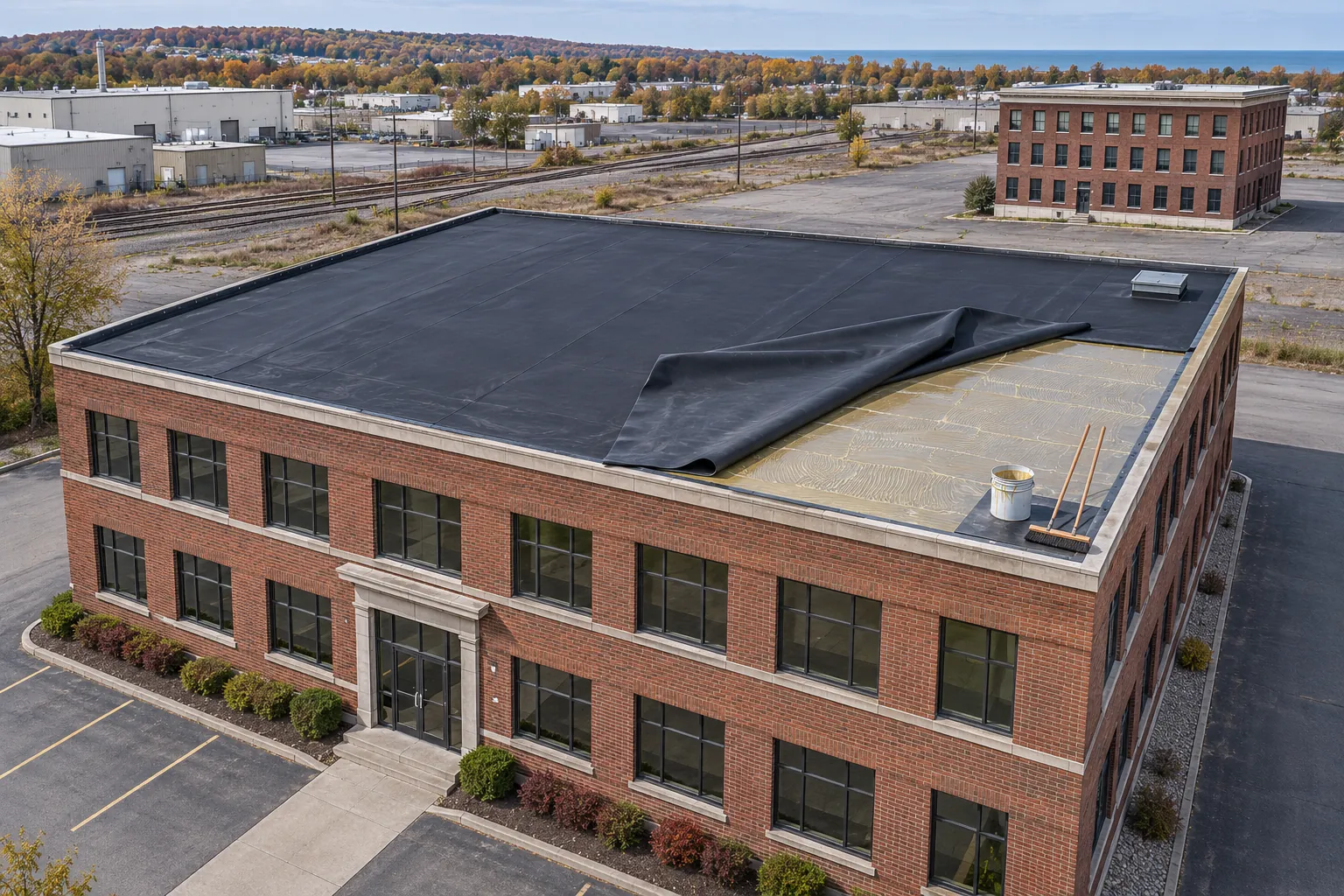
Rubber roofs on older plant offices can often be repaired by section, buying time until the shutdown that replaces them.
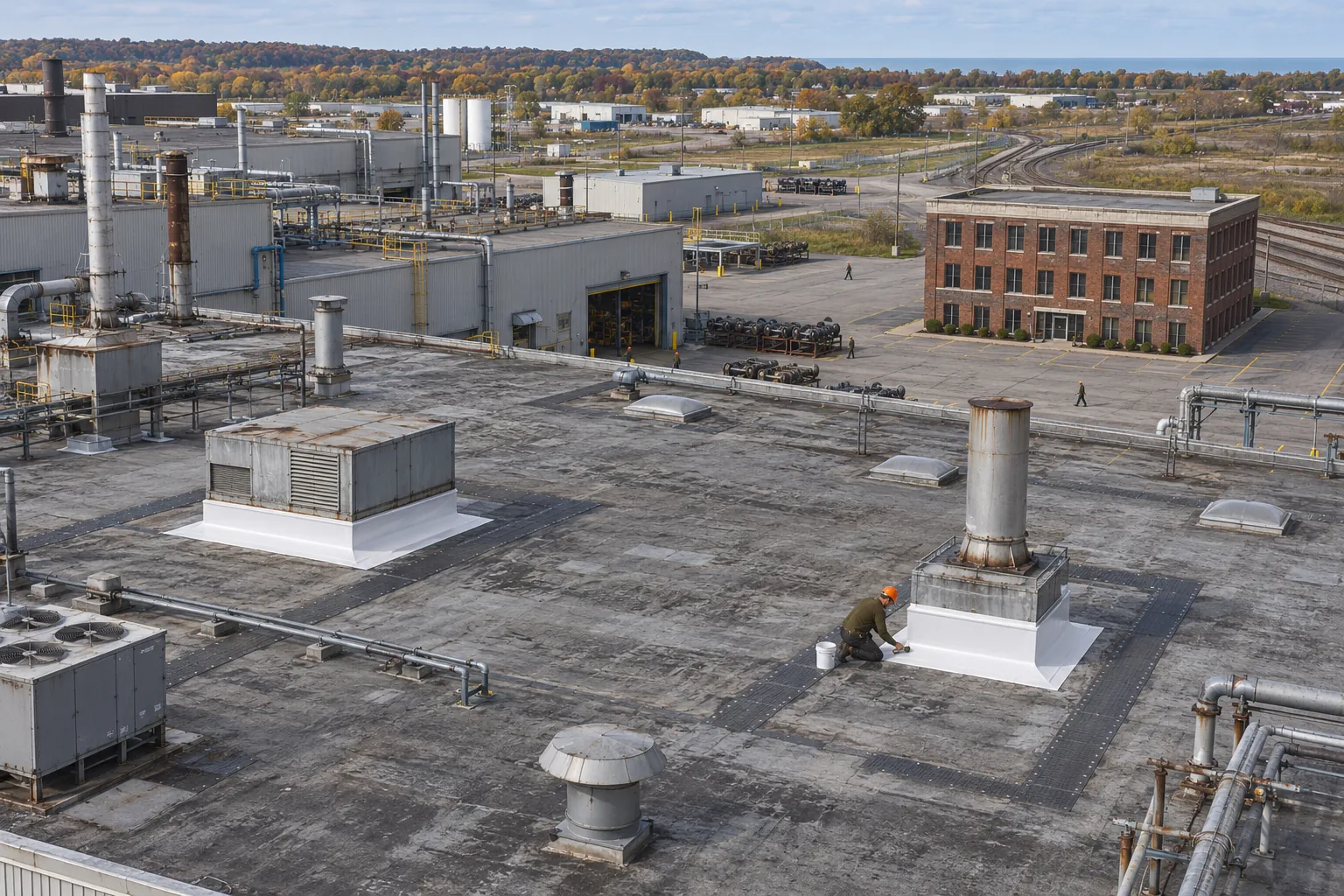
Production roofs over molding lines need raised curbs, cover board, and pads, all fitted into the shutdown section where each unit sits.
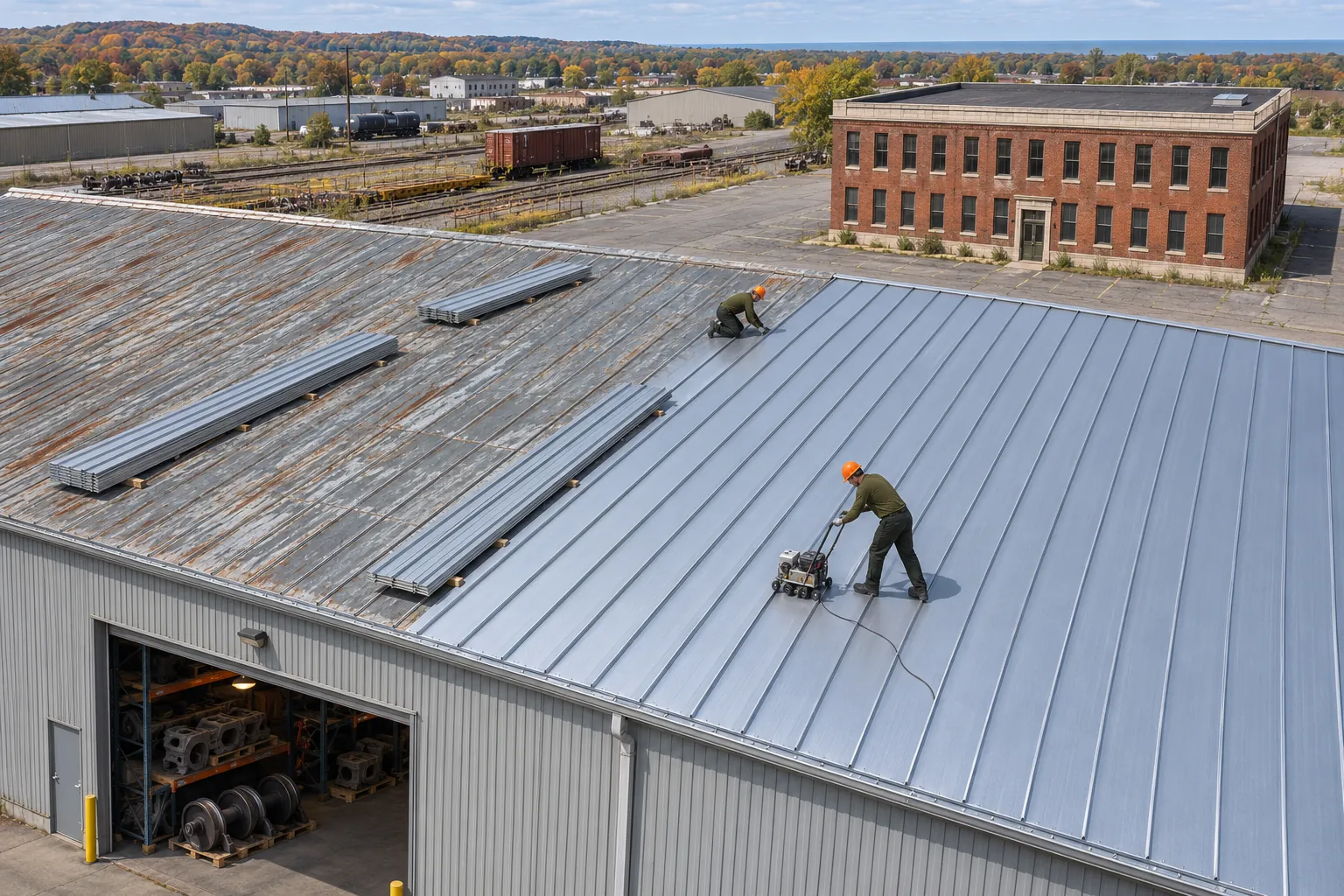
Steel storage and shop buildings on plant sites take panel repair or replacement, usually outside the shutdown schedule.
Send the dates now. We can walk the roof, cut cores, and size the first section to fit that window.
Each phase follows the same five steps, repeated for every shutdown.
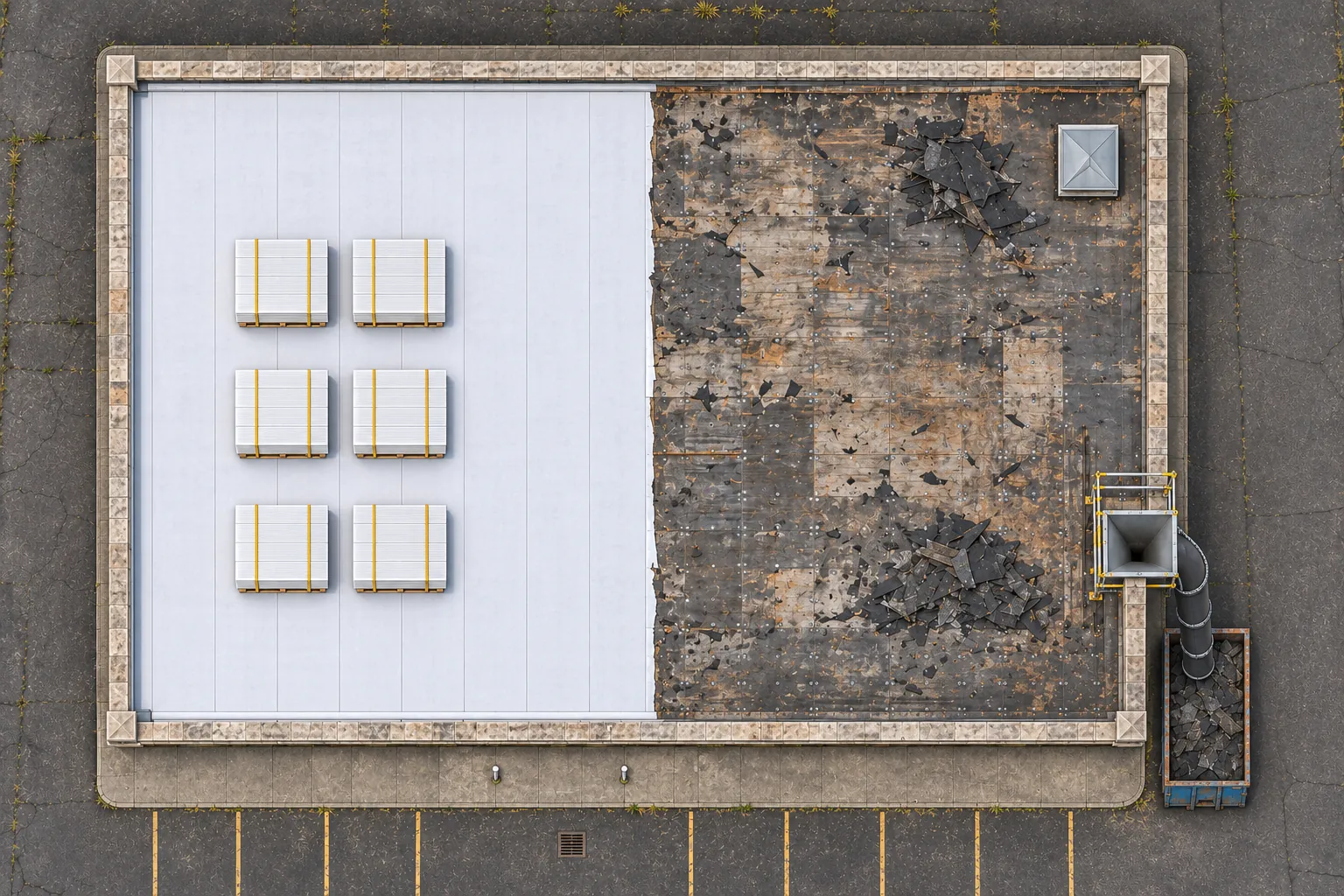
We mark which production lines sit under each part of the roof and which units serve them.
Stopping points go at walls, joints, and curbs, sized so each section opens and closes within its shutdown.
Equipment near openings gets covered, and plant staff confirm which areas stay clear during tear-off.
The section is torn off, rebuilt, and sealed at its edges before the shutdown ends.
You get a roof plan showing finished sections and the condition of those still waiting.
Building outside Meadville? Call us or send us a message. We replace commercial roofs in these nearby towns too.
| Town | County | What We See On Roofs There |
|---|---|---|
| Erie Home Base | Erie County | Plastics plants, rail shops, and port warehouses with drifts and iced drains each winter |
| Oil City | Venango County | Warehouse roofs reworked to take new rooftop units and curbs |
| Warren | Warren County | Finished plant roofs that other trades cross with tools and parts |
| Corry | Erie County | Owners weighing two or three bids for the same roof |
| Franklin | Venango County | Leased warehouses where owner and tenant share the reroof plan |
Yes, where the roof divides into workable sections. We set protection and connections with your staff before picking stopping points. Weather and nightly closure still apply, so the shutdown dates and the roof work get planned together.
The section in progress is sealed at a temporary tie-in that night. The rest of that section waits for the next window, and the tie-in is checked before work resumes.
That depends on roof size, how many lines sit under it, and how long each shutdown runs. A walk with your plant manager sets the count before any pricing.
Usually. Core cuts show where the board is wettest, and those bays leak onto equipment soonest, so they move to the front of the phase plan.
Some setup repeats with each phase, such as staging and crane days. Against that, the plant avoids lost production, and each phase is priced in the same written scope.
Sections over the busiest molding lines, or over areas with heavy rooftop equipment, need the longest windows because curbs get raised and units reset. Plain fields over storage or offices fit short shutdowns or ordinary weekdays, so they fill the gaps between the big windows.
Yes. Open seams, split boots, and loose drain flashing on sections still waiting get repaired so they stay dry until their turn. Those repairs are listed separately, which keeps the phase scope clean and shows what each holding repair costs.
Send your shutdown dates and the roof address. We will walk it and size the phases.