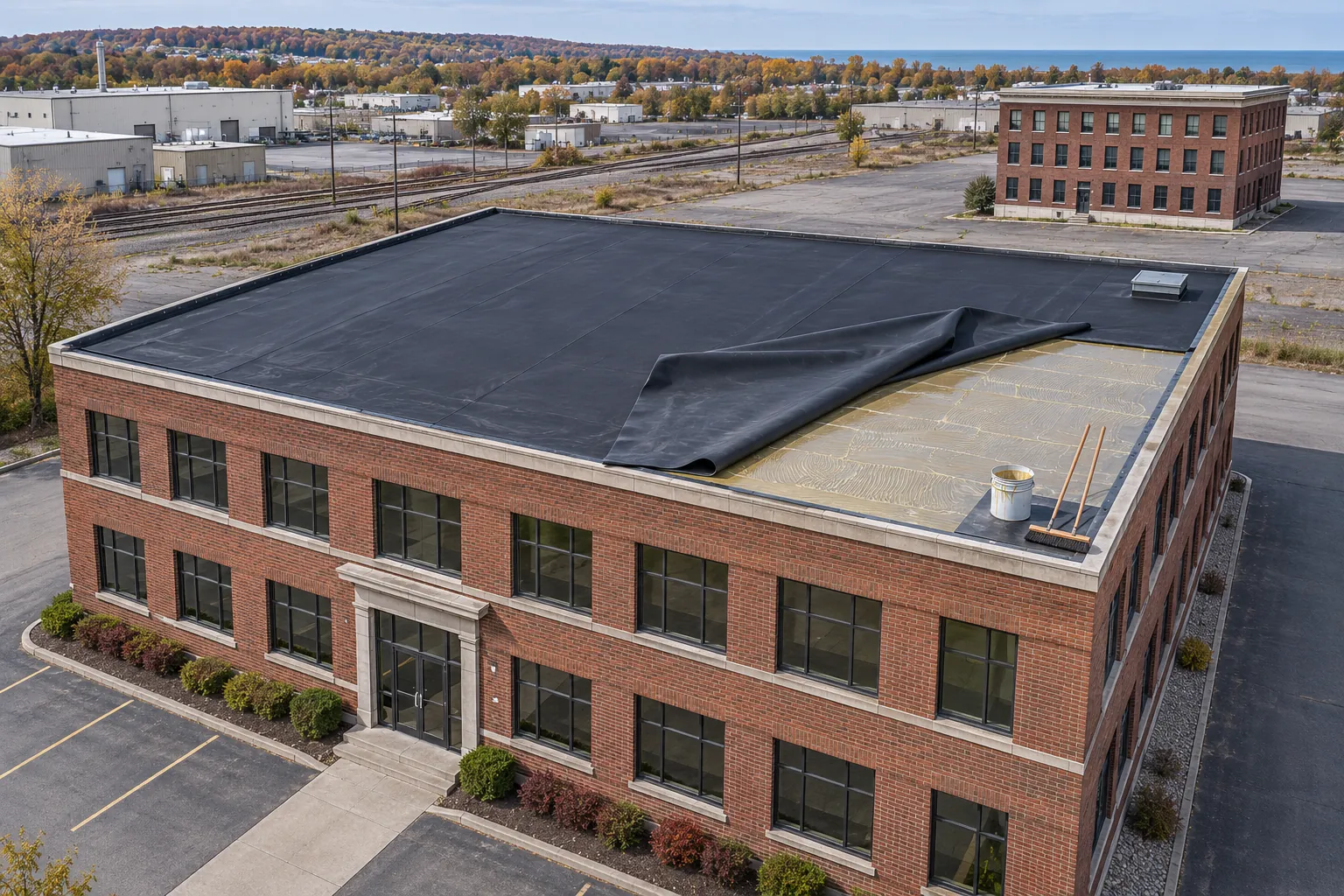
Tear-Off Depth
One bid removes everything to the deck while another covers the old roof. Ask how many layers each assumes.

As a Corry commercial roofing contractor, we replace roofs on plants, shops, and offices and write scopes that show what is removed, kept, and rebuilt.
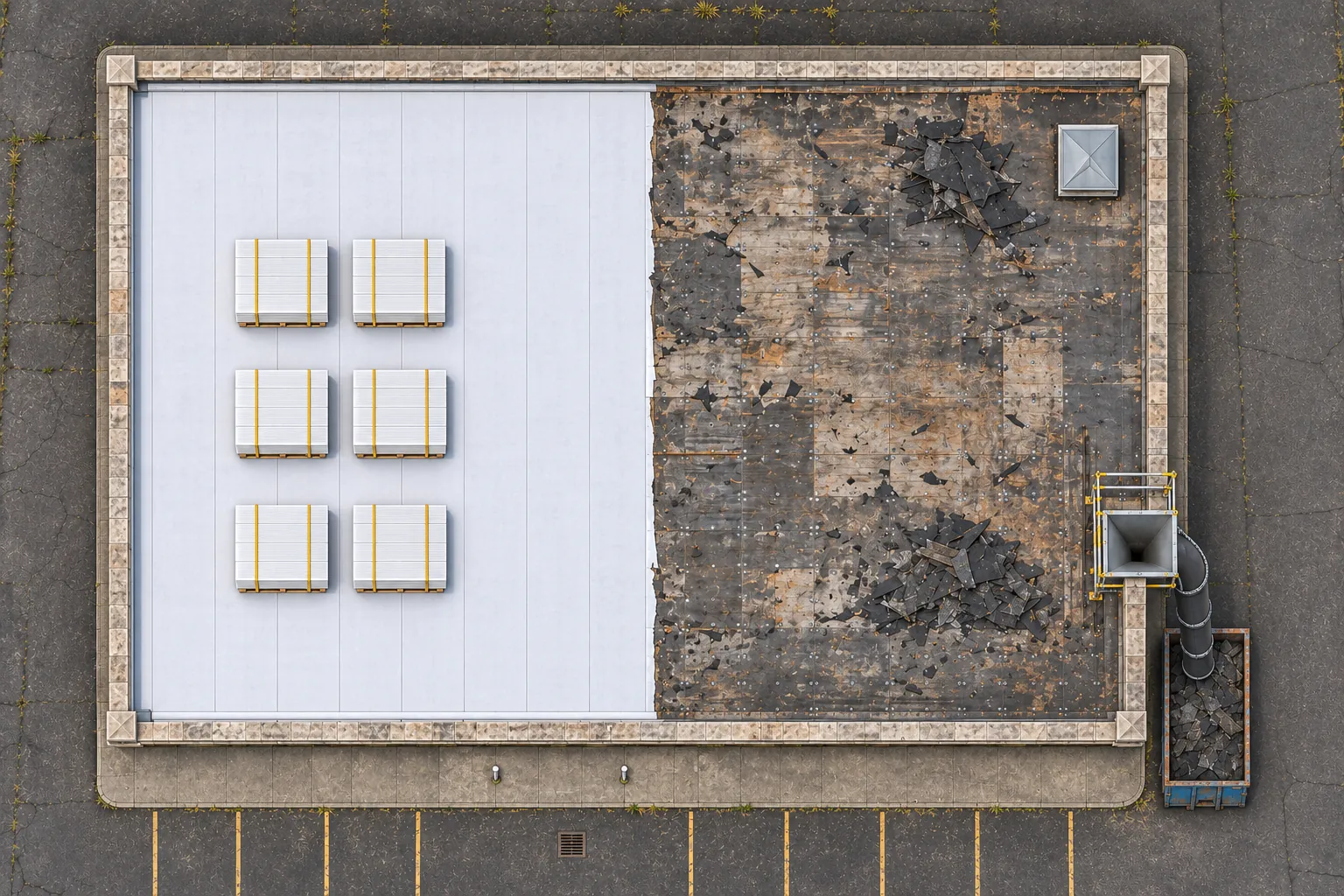
Corry commercial roofing bids often name the same membrane yet describe very different work under it.
Compare what each proposal removes, what it keeps, and what it rebuilds. Two bids for a 60 mil TPO roof can differ by a whole layer of insulation or a deck repair allowance.
We write our scope in plain terms and walk owners through it, including drainage, curbs, and any open questions the roof walk could not settle.
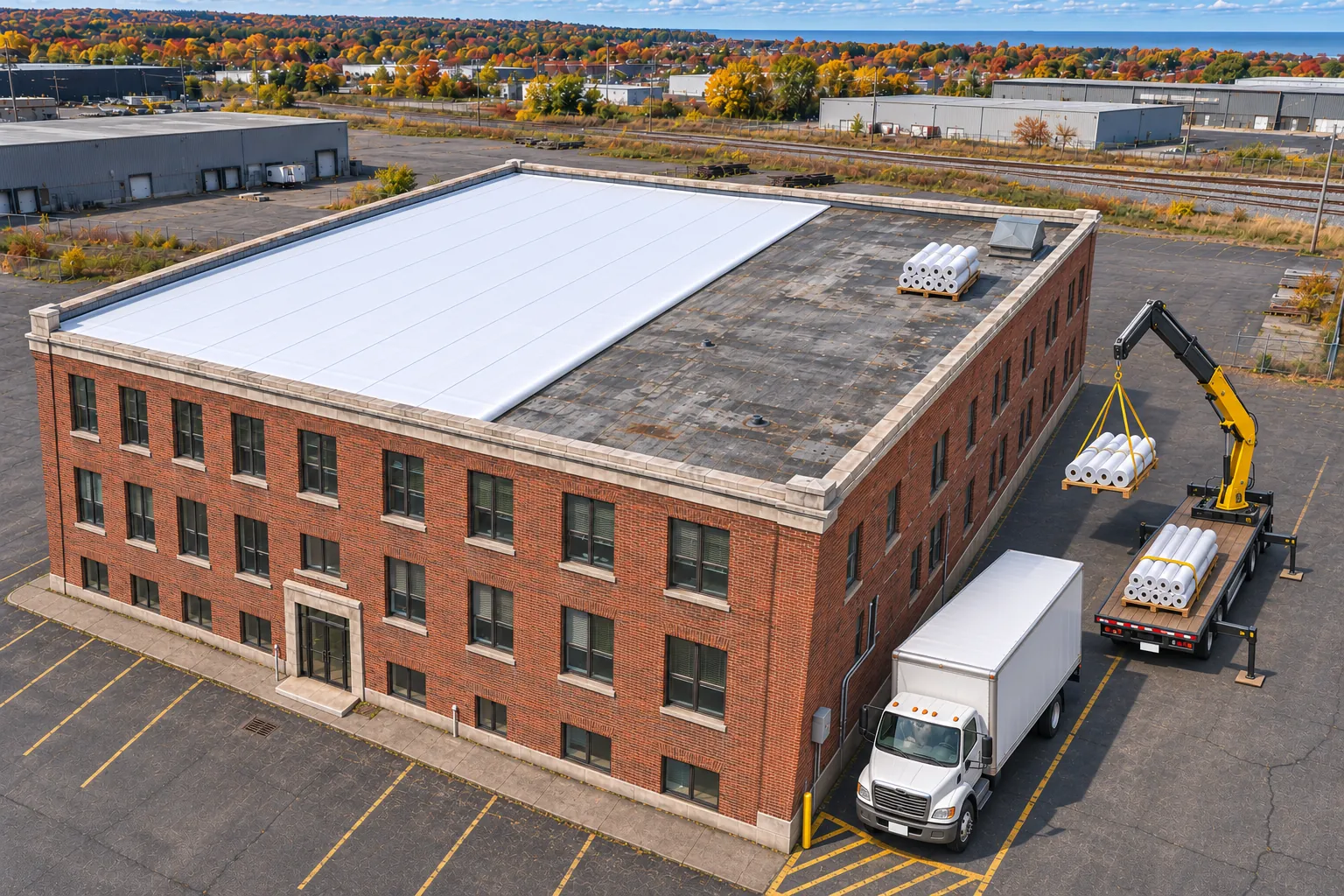
These five parts of a roof scope cause most surprises. Check each one in every bid.
One bid removes everything to the deck while another covers the old roof. Ask how many layers each assumes.
Rusted deck shows up after tear-off. Look for a unit price per sheet replaced instead of a vague line.
Thicker board raises the roof surface and affects curbs and edges. Check that the bid accounts for both.
Raising curbs for new insulation is easy to leave out. Each unit should be listed with what happens to it.
Some bids reuse old coping and gutters. New edge metal sized to the new roof height costs more but leaks less.
Fair comparison is the main gain. Fewer change orders during the job follow.
Our scope lists the removal, the insulation, the membrane, the flashing, and the drain work as separate lines. Hold any other proposal against it and the differences show right away.
Known conditions are priced up front, and unknowns get a stated unit price, so the final bill holds few surprises.
Recover or tear-off is decided from what the cuts show, written into the scope with the readings.
Questions about any line get a straight answer on the roof, standing over the detail in question.
Whichever system a bid names, the work under it decides the result. Here is what each one involves.
A Corry TPO bid should state sheet thickness, attachment method, insulation layers, and whether seams near units get extra treatment.
An EPDM proposal should say whether laps are taped or glued, how drains are flashed, and what happens at walls.
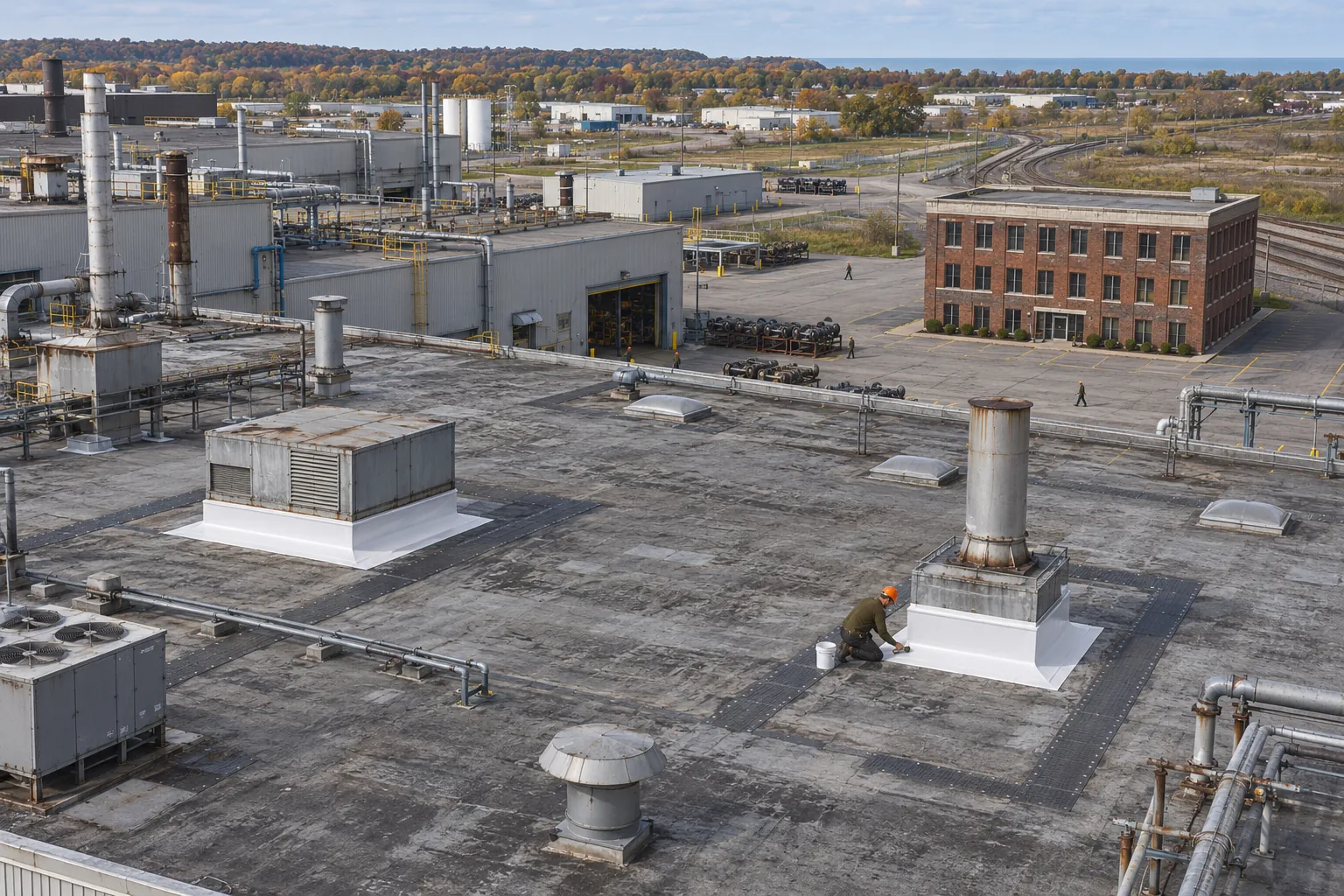
Plant roof bids need curbs, supports, and walkway pads listed unit by unit, plus how production areas are protected.
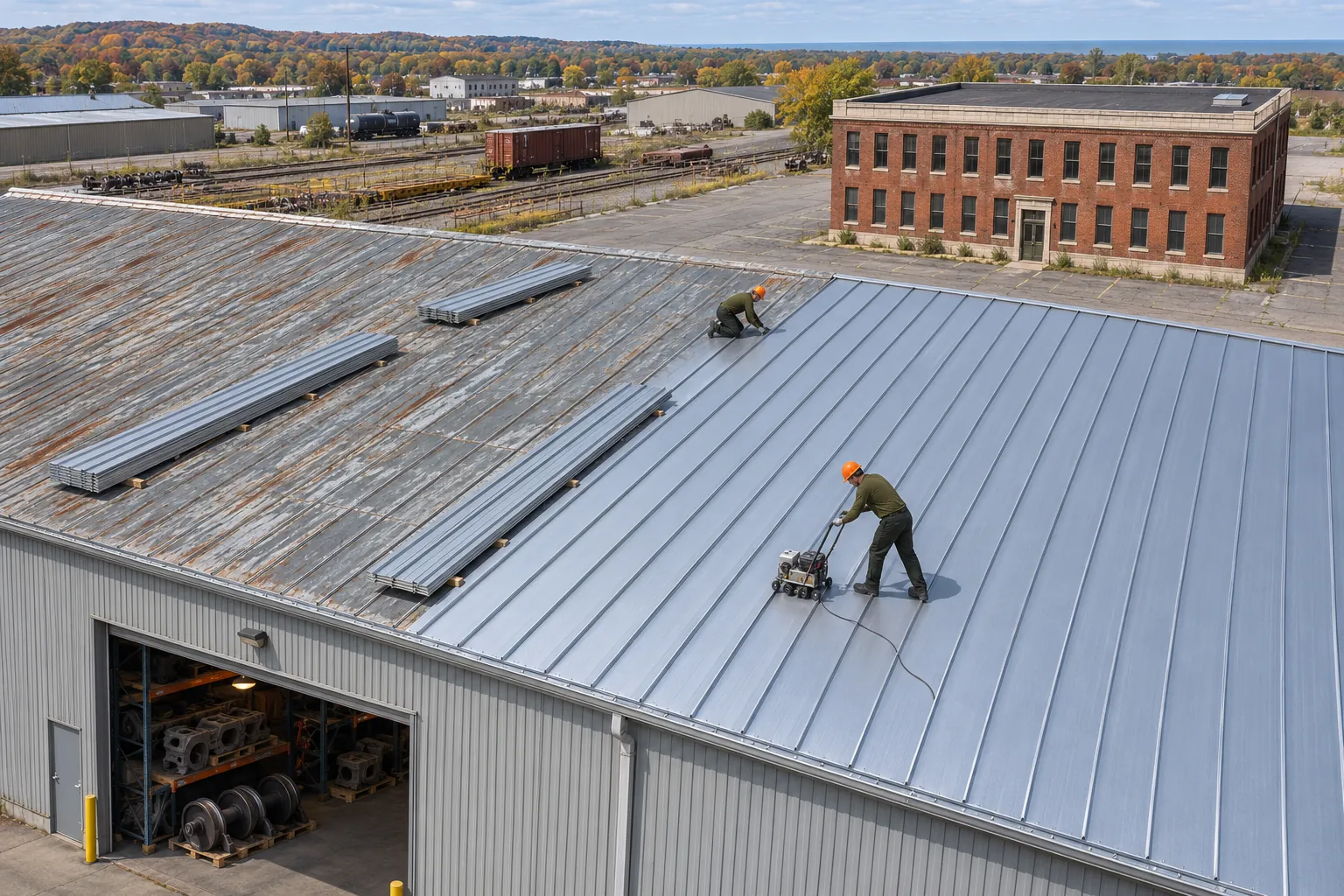
Metal bids should name the panel profile, gauge, clip or screw attachment, and how penetrations get flashed.
Bring them to the roof walk. We will show you on the roof where the scopes really differ.
These five steps produce a scope you can check against any bid.
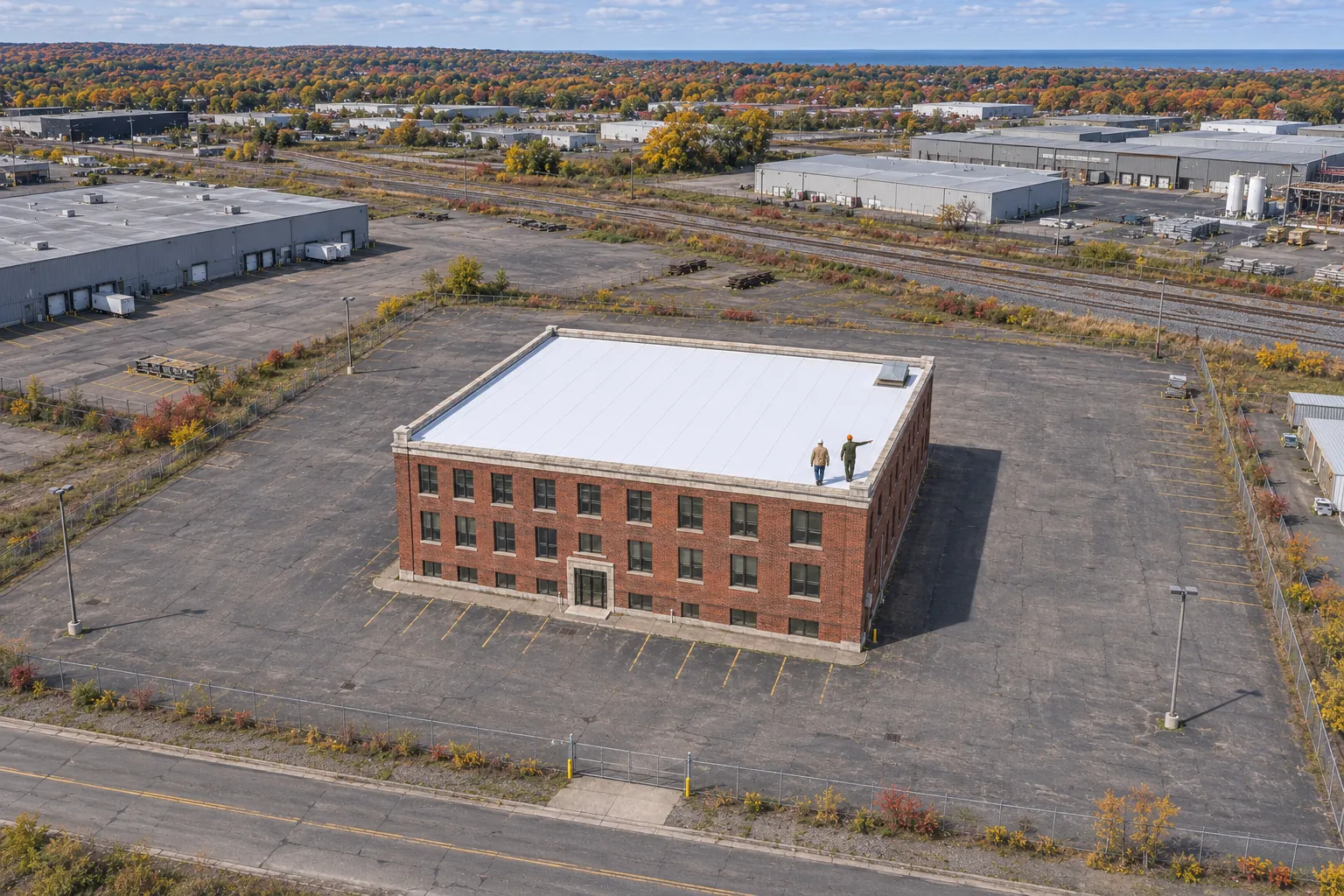
Area, edges, drains, curbs, and penetrations are measured and photographed across the whole roof.
Cuts show the layer count, insulation type, and moisture, which decide recover or tear-off.
Removal, deck repair, insulation, membrane, flashing, edge metal, and drains each get their own line.
Anything the walk could not confirm gets a unit price, so surprises have a known cost.
We go through the scope on the roof or by phone and answer questions line by line.
Building in another town? Call us or send us a message. We cover these towns as well.
| Town | County | What We See On Roofs There |
|---|---|---|
| Erie Home Base | Erie County | Plastics plants, rail shops, and port warehouses with drifts and iced drains each winter |
| Meadville | Crawford County | Plant roofs replaced in sections timed to process shutdowns |
| Oil City | Venango County | Warehouse roofs reworked to take new rooftop units and curbs |
| Warren | Warren County | Finished plant roofs that other trades cross with tools and parts |
| Franklin | Venango County | Leased warehouses where owner and tenant share the reroof plan |
Yes. Focus on what each bid removes, keeps, and rebuilds, and ask how it handles the conditions found on the roof. Material names matter, but understanding the work under the membrane and any open questions tells you more.
Usually the work under the membrane differs: one tears off and one recovers, or one includes deck repair and new edge metal while the other leaves them out.
A unit price for each sheet of rusted or damaged deck found during tear-off. It turns an unknown into a known cost per sheet.
Only after the scopes match. Line the bids up by removal, insulation, membrane, flashing, and drains, and price the gaps before comparing totals.
Yes. We walk the roof and point out where that scope matches what is up there and where it leaves something out.
The brand matters less than the thickness, attachment, insulation, and flashing details written beside it. Ask for those first. Two bids naming different brands can describe nearly the same roof, and two naming the same brand can describe very different work.
Anything the roof walk could not confirm: deck condition under a dry-looking area, hidden layers, or how a curb was built. A proposal that names those and prices them per unit is easier to trust than one that leaves them out.
Send the roof address and any bids you have. We will walk it and write a scope you can compare.