Lap Seams
Seam tape and adhesive let go first where the roof flexes or gets walked on. Lifted laps show as wrinkles running along a straight line.

As an Erie EPDM roofing contractor, we install, repair, and replace rubber membrane roofs on offices, schools, church halls, and port warehouses.
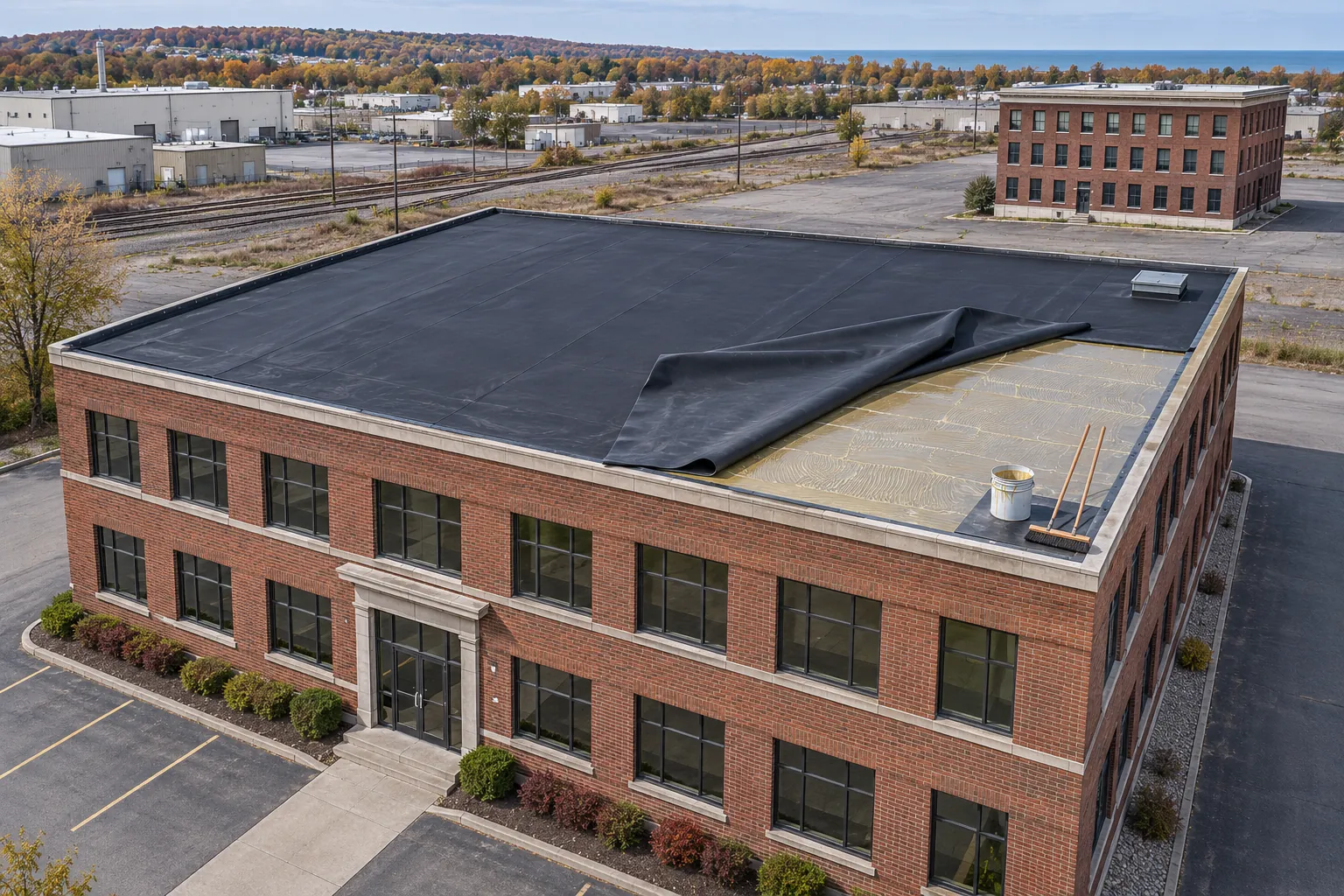
Erie EPDM roofing decisions turn on the seams, the flashing, and what sits under the sheet. Here is how each detail points one way or the other.
| Roof Detail | Repair The Sheet | Replace The Roof |
|---|---|---|
| Seams | A few lifted laps near units | Lap tape releasing across the field |
| Membrane | Firm rubber with small punctures | Shrunk sheet pulling at walls and curbs |
| Insulation | Dry in core cuts | Wet bays or soft spots underfoot |
| Drains | Loose clamping ring or torn flashing | Sagging deck holding water around the bowl |
| Repair history | First or second patch in that spot | Repeated patches on the same detail |
Rubber roofs age in predictable places. These five zones tell us whether repair still makes sense.
Seam tape and adhesive let go first where the roof flexes or gets walked on. Lifted laps show as wrinkles running along a straight line.
Shrinking sheet pulls away from parapet walls and leaves a gap at the base. Tight, bridged rubber at a corner is the warning sign.
Meltwater sits at drains through freeze-thaw cycles and finds any loose flashing. Look for dirt rings and soft rubber around the bowl.
Rubber boots split at the top collar after years in sun and cold. A cracked boot drips straight down onto the ceiling below.
Water that gets in spreads through the insulation before showing inside. Soft or spongy spots underfoot point to wet board.
Rubber roofs can be repaired in place for years. These are the jobs we handle on them.
Lifted laps are cleaned, primed, and covered with new cover tape, which closes the opening for good instead of gluing the old edge.
New target flashing and a reset clamping ring stop water that keeps returning to the same drain each spring.
Pulled or bridged base flashing is replaced with new rubber run up the wall and tied into the cap metal.
When the board below is wet, the old roof comes off and a new adhered or ballasted rubber roof goes down over fresh insulation.
Flexibility in the cold is the main reason. Easy repairs later and simple details at odd corners come next.
EPDM stays flexible well below freezing, so the sheet rides through freeze-thaw swings without cracking. It handles the long lake-effect season on older buildings that move a little with every cold snap.
A cleaned and primed EPDM surface takes a taped patch long after installation, which keeps small repairs small.
Brick offices and church halls with many walls and corners suit rubber, which folds into odd details without extra seams.
Large rubber panels cover a roof with far fewer laps than narrow rolls, so there are fewer edges to age.
Repeated patches on one detail point to a cause the tape keeps missing. Book a walk to find why water keeps returning there.
The first two steps decide whether the roof gets repaired or replaced.
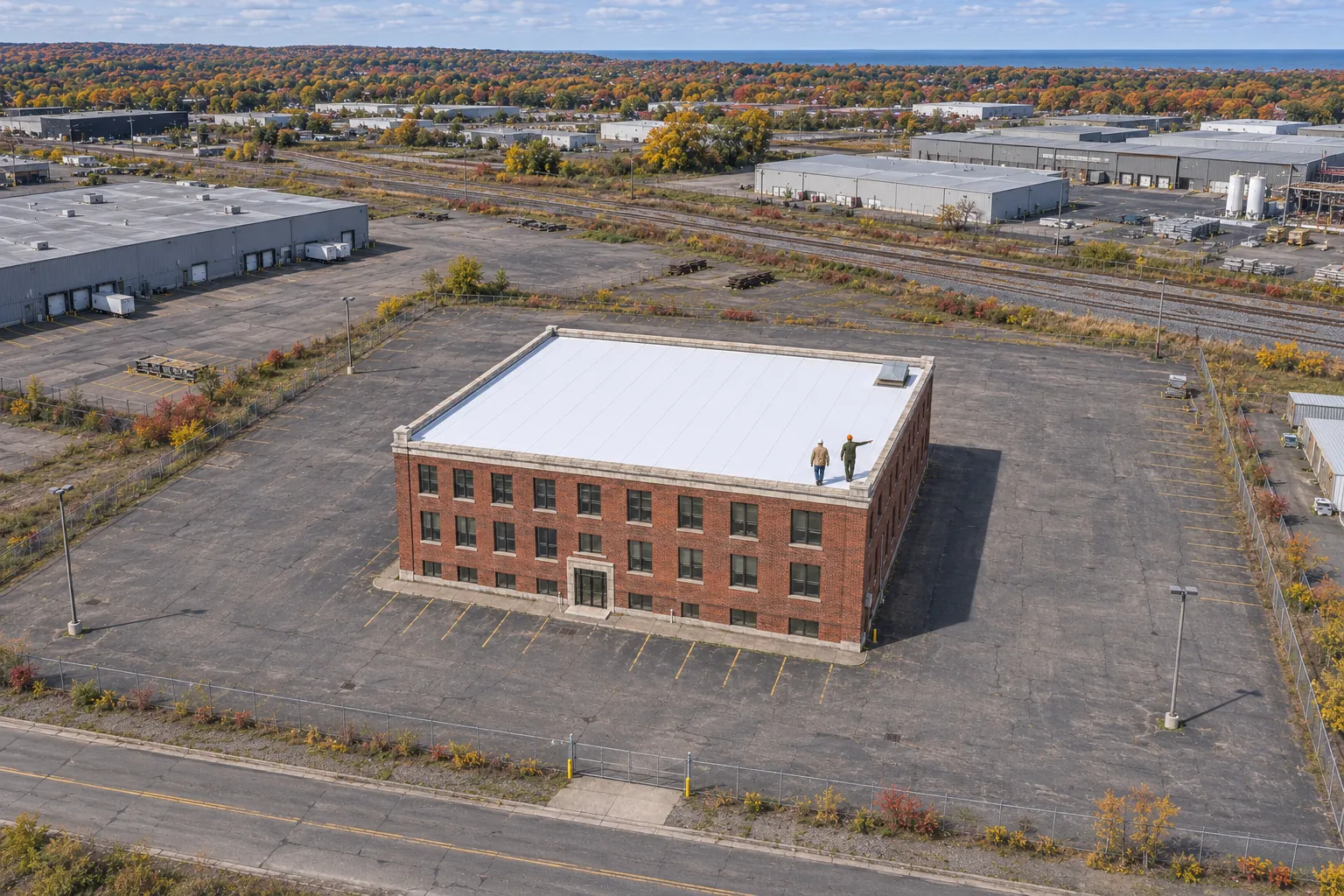
Every lap, boot, and wall base is checked by hand, and repeat repair spots are marked on a roof sketch.
Core cuts and readings at drains and low bays show whether water has spread under the sheet.
Dry board and a few failed details mean repair; wet bays across the roof mean replacement in sections.
Repairs use primer and cover tape; replacement goes down over new insulation with adhered laps and new flashing.
Clamping rings are reset, boots replaced, and the finished roof is walked with you before the crew leaves.
When rubber is the wrong fit, one of these usually is.
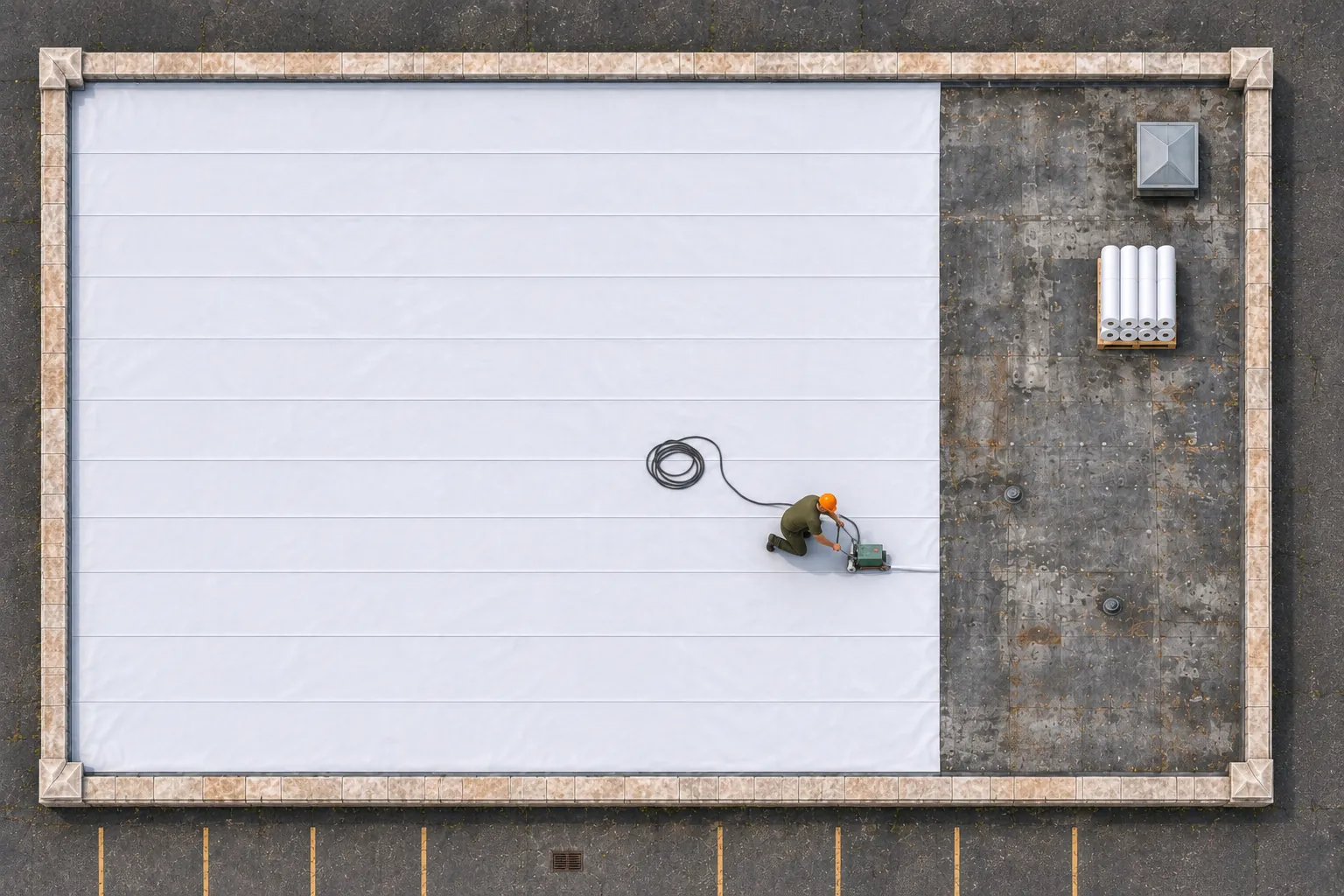
Welded white sheet suits wide, open roofs where heat-welded seams and a reflective surface matter more than easy taped repairs.
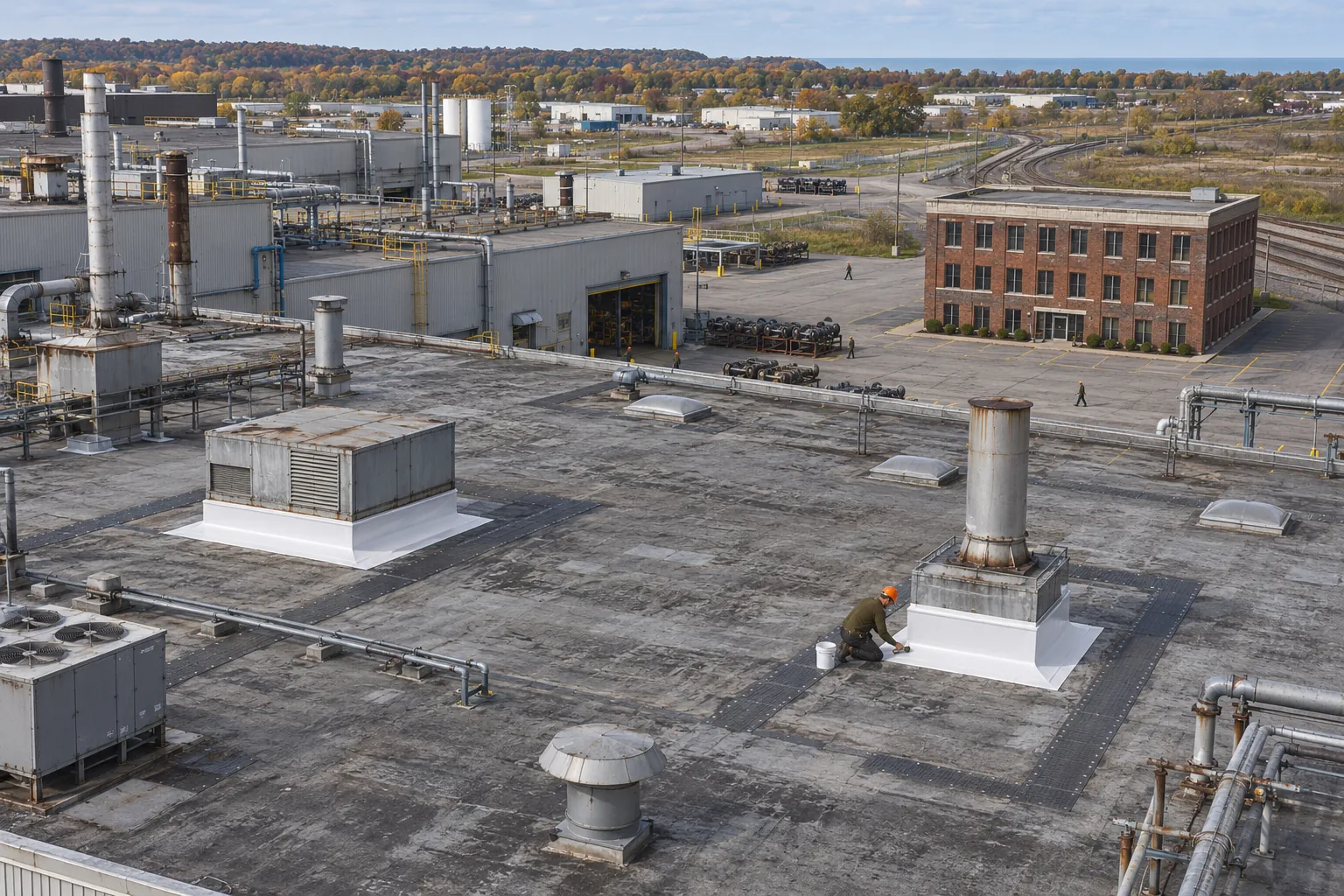
When the building under the rubber is a plant, curbs, supports, and walkways get planned before the roof system is picked.
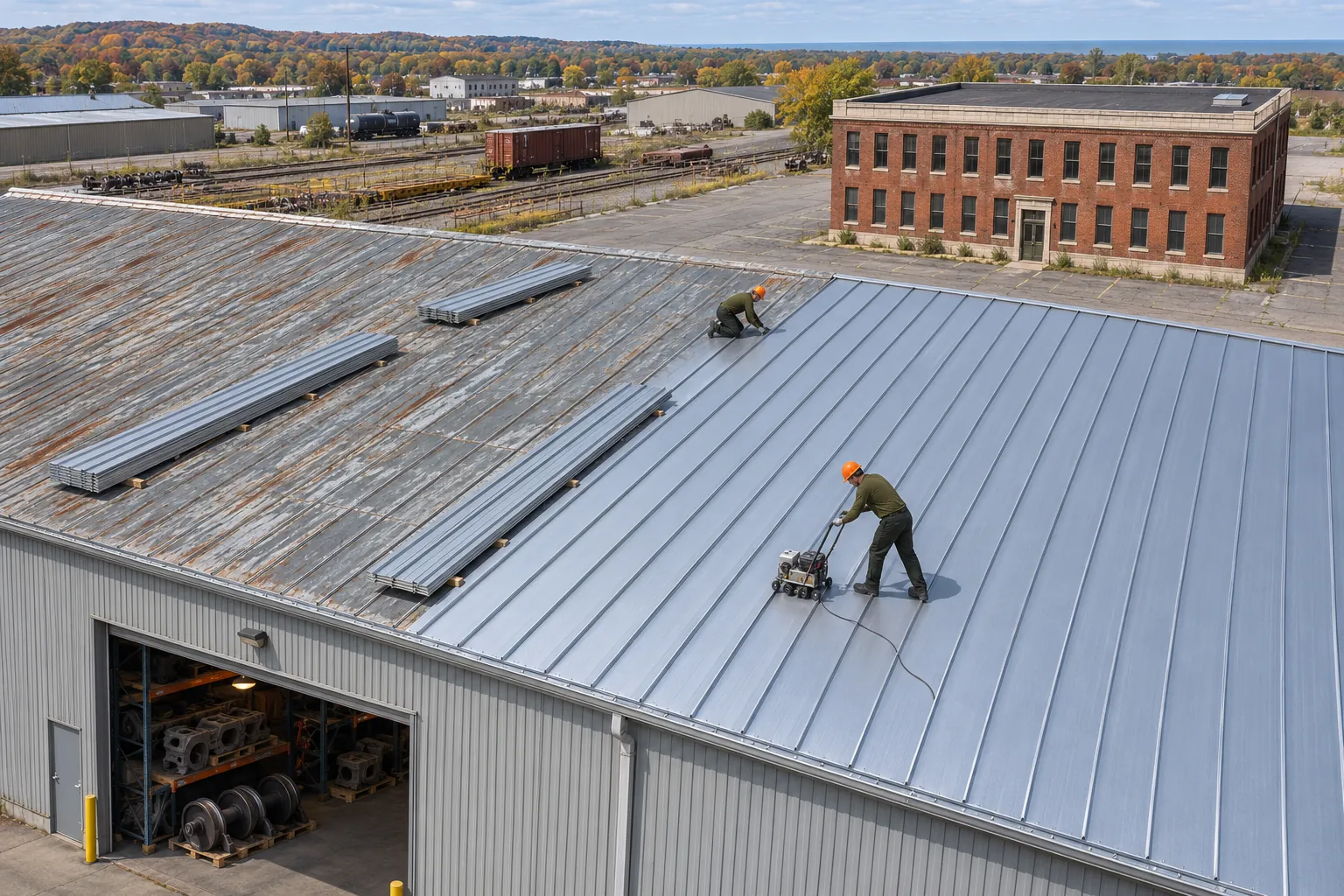
Steel panels replace rubber on low-slope roofs that pond, once retrofit framing adds pitch and the structure checks out.
An average number tells you little about your roof. Judge an older EPDM roof by its seams, flashing, and any moisture found under the sheet, plus its repair history. Those findings show whether repairs still make sense or the layers below have failed.
Freeze-thaw weather works on any weak drain connection where water sits. We check the flashing, the slope around the drain, and the board below it. A flexible sheet will not fix a drainage problem, so the repair has to deal with why water collects there.
The EPDM sheet is one part. The system also includes insulation, the attachment method, seams, and flashing at walls, drains, and curbs. Two proposals naming the same membrane can describe very different work underneath, so compare those parts line by line.
Seams near serviced units suffer from foot traffic, oil and solvent drips, and disturbed flashing. Repeated patching misses the cause if techs keep crossing the same lap. Walkway pads and a set service route stop the damage at its source.
Adhesives and primers need temperatures and a dry surface that Erie winters often lack. Mechanically attached or ballasted rubber widens the window, but icy decks and lake squalls still stop the work. Spring through fall is the easier season.
Tell us where the rubber roof leaks and how often. We will find the cause and write the fix.